
This post may contain affiliate links. Please read our disclosure policy.
Do you struggle with constant hunger? Are you hungry again a short time after eating? Have you ever stopped and asked yourself, “Why am I hungry all the time?”

Life as a Former Hungry Girl
As a former “hungry girl” I can totally relate. I was born with an appetite and love of food that for decades was hard to satisfy or understand…
Why did it take so much more food to fill me up than it did other people? Why was I usually hungry again within a short time of eating? Why was it so hard to lose weight even though I followed the nutritional advice of exercising and eating a low fat diet?
It didn’t make sense! I ate the same diet as my brother and sister growing up (AKA known as the Standard American Diet or SAD). But I was the one who seemed to need more to be satisfied and was often hungrier again in less time. I ate more and consequently weighed more than them.
Breakfast was most often high sugar low fiber cereal with skim milk or squishy white bread toasted with margarine and jam. All served up with a big glass of orange juice or Tang.
Lunch was usually a sandwich of more squishy white bread with chips or pretzels, cookies and the occasional piece of fruit. After school we often had cookies or some other treat.
Since my Dad worked nights, dinner was not as big a deal as in other families. We might have had soup and a sandwich, frozen pot pies, canned stew over rice, pizza, pasta, or a casserole of some sort.
Vegetables were an afterthought and usually canned.
As I entered my teens and well into my 20s and 30s, I followed the dietary advice of the day. I avoided fats, ate little protein, filled up on carbohydrates and ended up looking like the Pillsbury Doughboy – pale and squishy! I walked, jogged, played tennis, and regularly attended aerobics classes, but the weight clung to me like cat hair to a sweater.
I tried diet after diet, switched to sugar free soda.
After years of experimentation and lots of study, I’ve finally unlocked the secrets to avoid being hungry all the time and am excited to share them with you!
Blood Sugar and Sugar Sensitivity
I finally discovered that I am one of many people who is sensitive to sugar and starch. Highly refined carbohydrates in the form of sweets, breads, refined starches, crackers, rice, flour and cereals, send me on an extremely unpleasant blood sugar roller coaster ride.
After filling up on these foods, my blood sugar rises quickly, then plummets leaving me cranky, shaky and ravenous!
Before I realized what was going on, my hunger would lead me to fill up again and again on low fat highly refined carbs – fruit, bagels, crackers, fat free cookies, pretzels, rice cakes, fruit, etc.
I ended up fat, unhappy, overfed and undernourished because I didn’t know how to fuel myself properly. And I’m not alone. Many people are sensitive to sugar and starch which has led to an explosion of obesity, diabetes and other chronic diseases.
When you see an obese person, chances are you are looking at a person who has messed up her metabolism and hormonal balance by feeding herself the wrong kinds of foods. I believe obesity is more likely the result of lack of knowledge and understanding than lack of will power.
There is a better, saner way to feed your body and manage your hunger that is worth exploring. It has worked for me and many others and may work for you. It involves getting back to eating real food, balancing meals and snacks, limiting highly refined carbohydrates and eating more fat than the current “dietary experts” suggest.
When you fuel your body properly it has a chance to get back into balance, which is what it is always striving to achieve. When your hormones and metabolism are in balance, your body works properly and weight can melt away.
For the people on the planet who are sugar/starch sensitive, it’s about doing what you can to keep your blood sugar steady. Understanding how blood sugar and insulin work in your body can be confusing for those of us without a biochemistry degree so I’ve found it helpful to think of it in simple terms.
Most of us have bodies that like to be fed very very small amounts of glucose at a time. Think of a very slow steady drip, drip, drip from a faucet. When you blast your body with a lot of sugar/starch all at once, like turning on the faucet full blast, you flood your bloodstream with sugar so it has to release insulin to divert all that excess out of your bloodstream and into your cells.
Unfortunately, to compensate your body usually ends up releasing too much insulin which causes your blood sugar to drop too low and leads to hunger signals and another sugar surge, where the cycle repeats itself again and again.
These constant ups and downs are hard on your body can lead to obesity, insulin sensitivity, diabetes and heart disease. (More About Sugar: The Sweet and Not So Sweet)
Here’s What the Folks at Eat This Not That (affiliate link) Have to Say About Refined Carbs….
Even if you’re eating something at every meal, if your day looks something like this—a cup of sugary, flaked cereal for breakfast, a slice of pizza or a sandwich on white bread for lunch, chips for a snack, either white rice or pasta for dinner, and then a chocolate chip cookie for dessert—your problem is that you’re constantly fueling yourself with nutritionally-deficient refined carbs. Lacking the satiating fiber of their original form, simple and refined carbs burn up quickly in your body, which spikes your blood sugar and then causes it to crash. Low glucose levels are what triggers your hunger hormones, leaving you with a craving for more carbs!”
One of the best things you can do for your body is keep your blood sugar steady so it doesn’t have to work so hard. It will reward you with less hunger, better hormone balance and weight loss that feels effortless. I am slimmer, trimmer and more emotionally stable than I’ve ever been. My hunger never roars out of control like it once did.
It all comes down to eating the right kinds of foods in the right ways so that your body’s natural hunger/satisfaction signals work properly and blood sugar is kept steady.
Here Are My 12 Secrets To Avoid Being Hungry All the Time

1. Eat real food and avoid the processed, refined nutrient-depleted stuff.
The more nutritious food your body gets and the fewer “empty calories” you consume, the happier your body becomes which results in a healthier metabolism and less intense hunger signals.
Here’s what the folks at Eat This Not That (affiliate link) said about it…
It’s not calories that satiate your hunger, it’s nutrients: fiber, protein, and healthy fats. Unfortunately, simple, refined carbs are lacking in all three and so are many 100-calorie snacks. And they’ll just fill your body with fast, cheap calories. So no matter how much you eat, your body will go in search of more food. The result: a sluggish, hungrier you — one who’s more likely to dive into the snack drawer.
2. Include protein and healthy fats with meals and snacks.
They take longer to digest and help keep you feeling full longer.
Here’s what the folks at Eat This Not That Said…
Piling your plate with lean protein can help keep hunger pangs at bay. Protein takes a longer time to digest, which means it stays in your stomach and promotes feelings of fullness. But that’s not all–it’s also been shown to have an appetite-suppressing effect. In a study of 21 men published in the journal Nutrition Research, half were fed a breakfast of bagels while half ate eggs. The egg group were observed to have a lower response to ghrelin, were less hungry three hours later and consumed fewer calories for the next 24 hours!
Eating healthy fats won’t make you fat. In fact, just the opposite might be true! A recent review published in the European Journal of Nutrition found that people who eat full-fat dairy are no more likely to develop cardiovascular disease and type 2 diabetes than people who stick to low-fat dairy. And other research has linked full-fat eaters to lower rates of obesity compared to those who eschewed fat. When opting for dairy products, make sure to go with the full-fat options.
Here are some examples of meals and snacks that work well for me:

Breakfast:
Eggs in some form with 1 slice 100% whole wheat toast; 100% whole wheat toast with peanut butter or almond butter and fruit; full fat plain Greek yogurt with high fiber cereal, fruit and a drizzle maple syrup; Steel cut oatmeal with butter or coconut milk, fruit, nuts and a drizzle of maple syrup; cottage cheese with fruit; leftovers.
Snacks:
A handful of nuts; slices of apple with almond butter; popcorn with a drizzle of extra virgin olive oil (affiliate link) and sprinkle Parmesan; sardines on whole grain crisp bread; cottage cheese with fruit; hummus and raw vegetables. (24 Healthy Snacks for Weight Loss)
Dinner:
Salad, chicken or fish and vegetables; lentil soup; turkey or vegetarian chili; hearty soups, stews or chili; whole wheat pasta with lots of vegetables and turkey sausage; meat, green vegetables, salad with olive oil dressing and small baked potato with butter and full fat Greek yogurt.

3. Eat lots of vegetables.
They are nutritionally dense – full of fiber, vitamins, minerals, antioxidants – and fill you up. Try to include a rainbow of colors – white, green, yellow, orange, red, blue and purple – everyday. (23 Ways to Get More Fruits and Vegetables into Your Life)
Here’s what that folks at Eat This Not That said about eating more vegetables…
According to the USDA’s 2015 Dietary Guidelines, the average American isn’t eating enough vegetables. This is an issue because most leafy greens are rich in vitamin K, a micronutrient that studies have found regulates insulin levels. Vitamin K was found to increase insulin sensitivity, which makes it easier for your body to take up sugar from your bloodstream.
If your body is taking up sugar more efficiently from your bloodstream, it won’t need to take more of it in through food, helping to quash your cravings. Even better, veggies are some of the most fiber-rich foods out there, and fiber is what slows the absorption of the foods we eat from the stomach into the bloodstream.
In a Canadian study, researchers discovered that those whose diets were supplemented with insoluble fiber had lower levels of ghrelin, the hunger hormone.
4. Limit excess sugar.
If you must have dessert, have a small amount – just a bite or two at the end of your meal – so it doesn’t send your blood sugar soaring. Avoid sugary drinks including soda and fruit juice. (Here are 11 Simple Ways to Deal with Sugar Cravings)
5. Avoid Artificial Sweeteners.
They perpetuate your sweet tooth, causing you to crave more sweets, and they they interfere with your body’s hunger/satisfaction signals which can make you hungry. I noticed I was often ravenous within an hour of drinking a diet soda. Opt for a big glass of water with lemon, vegetable juice, green tea or sparkling water instead. (Top 4 Reasons Why I Stopped Drinking Diet Soda)
Here’s what the folks at Eat This Not That said about sugar and artificial sweeteners…
Whether it’s diet or regular, soda is one of the sugariest foods you can consume. And while many of us know sugar makes you crave sugar, artificially sweetened products and sugar alternatives (like aspartame, acesulfame K, and sucralose) can actually ramp up your appetite even more than real sugar, causing increased calorie consumption over time.
According to a study in the British Journal of Nutrition, researchers found that while drinks sweetened with glucose and fructose (two components of regular table sugar) increased satiety and decreased the hunger hormone ghrelin, drinks sweetened with an artificial sweetener were not able to affect satiety hormone signaling at all.

6. When you eat eat.
Stop multi-tasking through your snacks and meals. Your brain and five senses are a big part of digestion and satisfaction. If you eat while watching television or answering email, you won’t really taste your food which can lead your body to send out hunger signals even though you’ve eaten.
Here’s what the folks at Eat This Not That said about eating while doing other things…
Everyone knows that you eat with your eyes, but it turns out, your ears also play a role. A new study, published in the journal Food Quality and Preference, tested how our perception of the sound of eating food affects our eating habits.
They had two groups of participants eat crunchy foods, one with white-noise-producing headphones and the other without. These headphones were intended to mimic everyday behaviors of distracted eating, such as watching TV or listening to music while you eat.
It turned out, participants who were less aware of the sound of the food, because of the levels of white noise, ate more than those that could hear the food they were eating. Step away from the TV (or computer, for all you cord-cutters out there) and lower the music during dinner.
And if you’re out to dinner at a busy restaurant, maybe think about ordering something crunchy! As long as you can hear the food you are eating, it’ll make you aware of the fact that you’re actually eating food.
When you’re unaware, you basically forget that you’re eating, which can lead to an increase in food consumption.
7. Get enough sleep.
When you are overtired your body may send you signals that it needs more energy in the form of food. I often feel hungry when I am tired and really need a nap. Studies have demonstrated that people who are sleep deprived weigh more.
Here’s what the folks at Eat This Not That said about lack of sleep…
If you feel like you’re always delving into your office snack stash, you might be able to blame your lack of sleep. Nutrition expert and star of “My Diet is Better than Yours” Jay Cardiello explains that when you don’t get enough sleep, levels of leptin (the “I’m full” hormone) drop, which in turn increases appetite and makes comfort food more appealing. Besides stimulating your appetite, certified holistic health counselor, Seth Santoro, explains a lack of sufficient sleep “can cause you to burn fewer calories, lack appetite control and experience an increase in cortisol levels, which stores fat.

8. Drink lots of water.
Most of us don’t drink enough water and again, your body may inadvertently send you a hunger signal when it’s really thirsty, especially if you have a habit of ignoring thirst. If you are hungry and there is no real good reason you should be, have a big glass of water and wait 10 minutes. Your hunger may disappear. (Here are 23 Ways to Drink More Water for Weight Loss)
Here’s what the folks at Eat This Not That said about lack of water…
A study in the journal Physiology & Behavior suggests people inappropriately respond to thirst over 60 percent of the time by eating instead of drinking. That’s because your hypothalamus regulates hunger and thirst, and sometimes it mixes up its signals.
Just sipping on H2O is the solution to quelling your hunger pangs and, ultimately, helping you slim down. In fact, preloading meals with water can shave hundreds of calories from your daily intake. A study published in Obesity found that drinking two cups of water before eating led people to consume 75 to 90 fewer calories over the course of a meal.
Next time you’re hankering for a snack, knock back a cup of water first and wait 20 minutes. If you’re still hungry, eat something.
My slow cooker is my favorite kitchen tool for making healthy cooking, eating and meal planning easy!
�»)More Reasons for Always Being Hungry and What You Can Do About Them…
9. Stress
Is Stress the Reason You Can’t Lose Weight? According to the folks at Eat This Not That, While stress may shut down appetite in the short term—it pumps out the hormone epinephrine (also known as adrenaline) that triggers the body’s fight-or-flight response and puts eating on hold—if stress persists, it’s a different story. Your adrenal glands then release a different hormone called cortisol, which will not only trigger your hunger hormones, but it will also pull lipids from the bloodstream to store them in our fat cells.
10. Eating Too Quickly
Hunger hormones take anywhere between 20 to 30 minutes to get to your brain, according to Cara Stewart, RD, LDN, so if you wolf down your entire meal in under 5 minutes, you’ll most likely eat more than your fill. Which is why it’s best to eat slowly, something I’m still working on!
Here’s a slow down strategy that can help… When your entrée arrives, dive in and eat half, then wait at least 10 minutes before eating more. While you chat and sip water, your stomach will have a chance to digest and decide whether you’ve had enough—no matter what the plate’s saying.
11. You’re taking in too much food porn.
Looking at those “food porn” images of oozy yolks dribbling down cheesy burgers is going to make you hungry—even if you weren’t before you started scrolling.
A review published in the journal Brain and Cognition found that when we see “food porn,” it exacerbates our desire for food through a channel of neural and physical responses called “visual hunger.” The “hunger hormone” ghrelin increases in response to seeing food images, actually making your hungrier!
That’s why I gave up watching The Food Network a couple years ago and avoid food-porn sites like the plague. I also try to avoid being exposed to tempting food commercials by recording my favorite tv shows and skipping past them.
12. You have food in plain view.
According to the folks at Eat This Not That, A study, conducted at the search engine – Google’s – New York office dubbed “Project M&M” found that placing chocolate candies in opaque containers as opposed to glass ones curbed M&M consumption by 3.1 million calories in just seven weeks.
Keep snacks out of sight, and only reach for them when your tummy is rumbling and hungry enough to eat an apple. This was one of biggest lessons learned from the powerful book, Mindless Eating by Brian Wansink. Creating a Healthy Weight Loss Environment will do more than all the willpower in the world!
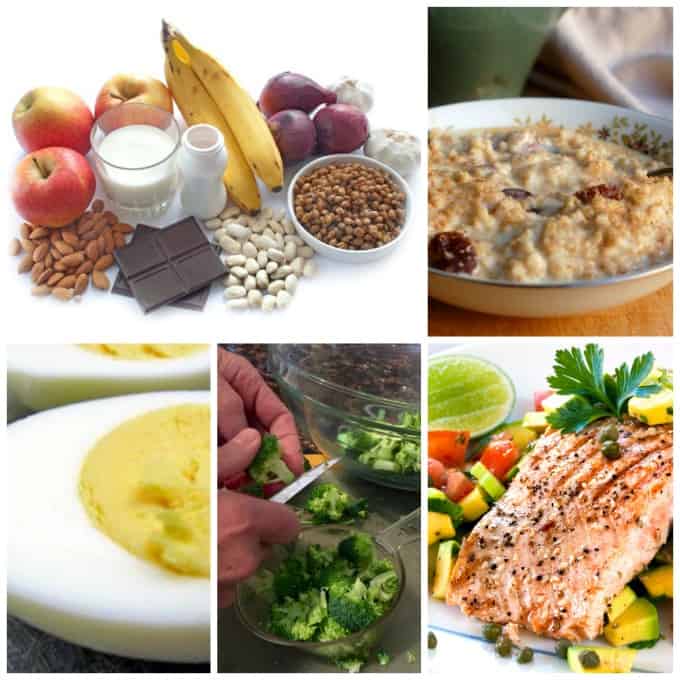
6 Best Filling Foods to Eat When You Are Always Hungry
Here are 6 of the best foods to eat that can help you feel full longer:
- Beans – eat them on their own, add them to salads & soups or puree them into a light yet satisfying dip.
- Brothy soup – all the liquid will help fill you up for relatively few calories – one of my best secrets for staying slim. The key is sticking with broth- or tomato-based soups instead of cream-based ones. Think minestrone or butternut squash.
- Eggs – a great low calorie protein rich food perfect for breakfast, lunch, supper or a snack.
- Greek Yogurt – high in both protein and water, two great sources of satiety, but remember that plain is a better choice because it’s free of extra sugar.
- Non starchy vegetables – packed with water, fiber and tons of vitamins and minerals, veggies like broccoli, cauliflower, celery, peppers, and leafy greens fill you up with minimal calories.
- Oatmeal – has it’s best filling potential when cooked with water or milk, rather than mixed into muffins, breads or granola.
Related Posts:
Essential Ingredient for Weight Loss
Is Stress the Reason You Can’t Lose Weight?
Updated 4/12/16! I Originally wrote this article back in 2011. When 20 Reasons Why You’re Always Hungry, from the The Experts at Eat This Not That, showed up in my inbox this week, I decided it was time to compare how what I said back then based on my personal experience, compared to the latest science-backed information.



Wow, this makes so much sense! I cant believe I haven’t thought of this before, being a science graduate. Thank you for the enlightenment to the reasons why I always feel hungry soon after a carb heavy meal. This will help me a lot to realize my health goals!
I really appreciate your post! After a major and much needed weight loss over the summer, I have been maintaining my weight at its healthy target by moderation and portion size control. However after a crazy binge-weekend with my friends this past weekend, I noticed a hunger that I have never felt before. This posting is a great resource for those who are hungry and don’t know why! Awesome tips!
Thanks for taking the time to leave such a thoughtful comment, Crista. I appreciate it.
I’d like to add to your article. I have lost 40 pounds in the past 1.5 years by maintaining a regular exercise program and a change in eating habits. I was expecting a greater weight loss but I will take what I got. In the beginning I do have to say that reducing your food intake is very much a mind over matter. Your mind says you are hungry, but you really are not hungry. I literally had to time myself before my next meal. I told myself, if I can just get through this for 2 weeks it won’t feel so bad. 2 weeks passed by and I was able to make it from breakfast to lunch to dinner without feeling starved. Working up to an exercise routine was the same way, slow and steady. Then MAINTAIN. If you stop for even one day, it is harder to get back on track with exercising. Same with eating. If you stop to give into a burger and cupcake on a weekend “free” day, the following couple of days you are going to feel like you are starving again. It is mind over matter sometimes. Those times when you are hungry you have to look at yourself and ask if missing a meal is really going to harm your body. Then when you finally get to meal time, its not so bad.
Franci,
Thanks for adding to the discussion. I appreciate your thoughtful comments. I think you are right that much of this is habit and mind over matter. I still engage in lots and lots of self-talk too. I think it helps. Often we are not physically hungry, we just think we are. And the truth is that hunger for most of us struggling with our weight, is not life-threatening. I had to learn to make friends with my hunger and not fear it. Real physical hunger ebbs and flows. When I am engaged in activities that I love, I can go hours and hours without feeling hungry. I like the question, “Is this going to harm your body.” I think if we are always asking, “Is what I’m about to do going to help me or harm me?” we can make great progress in dealing with our hunger and our compulsions.
Hi Martha. Finally a site that makes some sense. Believe me, I have spent many hours over the past 3 years finding a solution for my health problems. I am 60 years old. My stomach was always bloated, I looked like I was pregnant. And now I am prediabetic and refuse to take medicine. I decided to keep a journal of everything I eat. Your information helped me find my problem. Gluten causes the bloating and made me fat. All sugar, also fruits, and again gluten make me hungry and cause night sweats and insomnia when eaten at night. So now I am back to eating protein and veggies and healthy fat. I cook large quantities of thinly sliced chicken breasts and tuna patties. These are my snacks. So my weight is going down, don’t feel hungry anymore and sleep much better at night. It’s not easy, the withdrawal symptoms of gluten and sugar are sometimes difficult to handle.
Hugs from Curacao
Hi Claudette,
Thanks for taking the time to write to me. I’m so glad my site was able to help you identify your sensitivity to gluten and to sugar! Nutrition and healthy eating is such a personal thing. We are all so different, but when we pay attention to our body’s signs and symptoms we will find our solutions. Your journaling and self discovery clearly illustrate this. And like you said, though it’s not easy to withdraw from gluten and sugar, the positive benefits are so worth it. I’m happy to know that you are not hungry anymore and are able to sleep better and your weight is going down. All signs that your body is more happy with the way you are nourishing it.
Hugs back to you from Phoenix
I feel hungry ALL the time. Have had scope done and have blood work every 3 or 6 months. Iron is fine, thyroid, sugar, Vitamin D and B12 levels fine. I have celiac ( diagnosed 2010) but it is under control by diet. Very restricted diet. Allergic also to grains and milk products. I ONLY EAT: apples (red del and granny smith) avocado, carrots, green beans, broccoli, baked sweet potato, ground turkey, lettuce, spinach, fish (tilapia), salmon (canned but drained) peaches, if canned in pear juice only – no syrup or added sugar. Any thing else breaks me out (cysts), makes me itch or gives me diarrhea.
Have had bouts of candida (yeast) in the past.
I eat no sugar, bread, caffine. Only drink water. All grains, like gluten free oatmeal, gluten free corn tostitos, even greek yogurt and white potatoes or rice give me diarrhea or make me itch all over. I eat about every 2 – 3 hours, same thing every day going on about 3 years now. I’m 54, weigh about 110 not on hormones had hysterectomy 2006. Certain vitamins make hunger so much worse, like zinc and milk thistle which I sometimes take to help liver function, so I only take them occasionally. Was vitamin D defecient about 4 years ago, but it is ok now, I still take dry D 2000 IU daily because I must avoid sun. It also makes me itch like ants biting me and worsens a terrible skin condition i have called porakeratosis (ugly brownish spots on legs and arms that can not be treated according to derm) My hair is falling out horribly. Some days I am unbearably fatigued and exhausted. Naps help for a little while. Sometimes I feel like I’m a mess…. but I am thankful for the foods I can eat and I am happy for so much good in my life (God blesses me every day). Just wish I did not feel SO HUNGRY ALL THE TIME.
Hi Gorettia,
Thanks for stopping by my site and leaving such a thoughtful email. I can understand not wanting to feel so hungry all the time. I’ve had great success in my life with mind-body exercises such as yoga and meditation and various breathing exercises. They can all help to soothe me in times of stress. Have you tried any of these?
As I read your email, the first name that popped into my head was Dr. Mark Hyman. Are you familiar with his work? You may want to check out his website. It’s loaded with information that you may find helpful.
I wish you the best.
Warmly,
Martha
I do all of those things you wrote about and am still hungry all the time (no I’m not pregnant). I’m not on medication, drink lots of water, eat loads of vegetables, fruit, eggs, homemade pumpkin soup for lunch and have meat and veggies for dinner and am still hungry!!!! And i’ve put 4 kgs on in the past month.
Your article really spoke to me! My weight isn’t out of control yet but it’s getting there and I really enjoyed this! I’m following your advice!!
A really great article, thanks so much. Definately going to be tweeting this one!
Everything you listed is exactly the things I have been finding out! But I hadn’t figured out that I was intolerant to sugar. That makes total sense because if I eat cereal or a carb breakfast I feel horrible for the rest of the day. If I start with an egg – so much better. I have also figured out that having smaller meals through out the day helps too. But here is the biggest thing – I haven’t slept well in years. I got sick and I slept 4 days straight – appetite gone!! That really made me wonder because I have been hungry for a long time – since my daughter was born. I haven’t slept that long either. Despite being sick, I had a lot of energy. I wasn’t eating, but resting and when I would get up, I had energy to do stuff until my illness shut me down again. It was a really different experience for me. But I was excited to NOT be hungry!! Thank you for your article, it helped me “put a finger on it”!
Hi Rachel,
Thanks for your comment. I’m so glad you were able to “put a finger” on your hunger!
Thank you for this post. As I was reading, I felt as if you were describing me! My dad has diabetes and both his parents died from diabetes complications: renal cancer, etc. So, I am trying to prevent that happening to me. I have always been a “hungry girl”. On the other hand, I’ve always been thin. Never really putting on the pounds so it never occurred to me that being hungry could mean I have a problem with my blood sugar. Usually, if I go over three hours without eating I just get cranky but lately, however, my being hungry all the time has been accompanied with light headedness, numbness and tingling in my hands, cold sweat, etc. I’m also very active: I’m an actress and a frequent yoga practitioner but still, I don’t think one is supposed to feel dizzy and light headed after three hours of not eating. I have over-hauled my diet, eliminating as much processed foods and refined sugars as I can. I do need to eat more vegetables, and more variety at that. Because of my hectic schedule, I am usually snacking more than anything and your post helps me plan my snacks better so I can avoid falling into hunger traps like junk food. Because I’m thin, I’m not taken seriously by other people, they think I’m complaining so I seriously thank you for bringing this to light.
Finally, Are there any apps that you (or anyone) can recommend for low glycemic foods?
Sol,
Thank your for your thoughtful comment. I really appreciate it. As you so articulately explain, blood sugar issues occur in slim people too. I am not familiar with an apps for low glycemic foods.
The foods that have helped me regulate blood sugar swings and prevent hunger include nuts (my snack of choice), nut butters, eggs, Greek yogurt, avocados, cottage cheese, and beans.
With all your symptoms, you may want to check in with your health care provider.