
This post may contain affiliate links. Please read our disclosure policy.

Sometimes the best cooking isn’t really about a recipe at all. This vegetable skillet is one of my favorite examples.
Yes, I’ve written it with zucchini, yellow squash, mushrooms, and grape tomatoes—because that combination is a particular favorite of mine and comes together beautifully. But the real gift here is the technique: a hot skillet, a little olive oil, good fresh vegetables, and about twelve minutes of your time.
What comes out the other side is something that never fails to remind me why I love vegetables. Not because they’re virtuous or low in points—though they are both—but because when you cook them simply and well, they are genuinely delicious. Caramelized edges, tender centers, concentrated flavor. Nothing fancy. Just good food.
This is also one of my favorite alternatives to salad. When I want something warm and satisfying alongside my protein but don’t want a heavy side dish, this is what I reach for. I make it year-round, swapping in whatever looks best at the farmers market or is about to turn in my produce drawer.
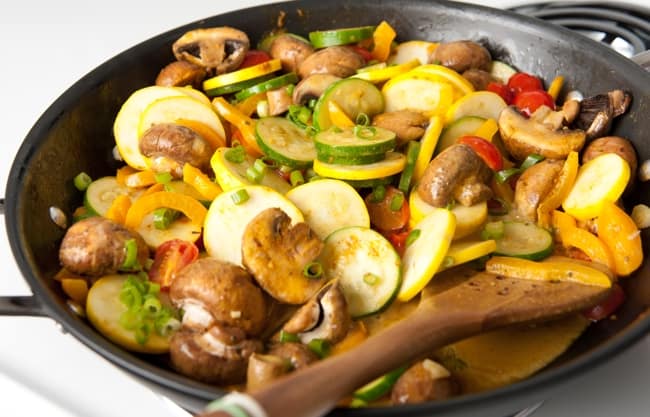
Table of Contents
Why I Love This Vegetable Skillet
- More technique than recipe — once you understand the method, you can make this with almost any vegetables you have on hand.
- Just 40 calories and 1 WW Point per serving — all the vegetables are zero points; only the oil counts.
- Ready in under 30 minutes — 15 minutes of prep, 12 minutes of cooking.
- A wonderful alternative to salad — warm, satisfying, and endlessly variable.
- Naturally vegetarian, gluten-free, and low carb — works for almost every eating style.
- Easy to turn into a complete meal — just add the protein of your choice.
Ingredients
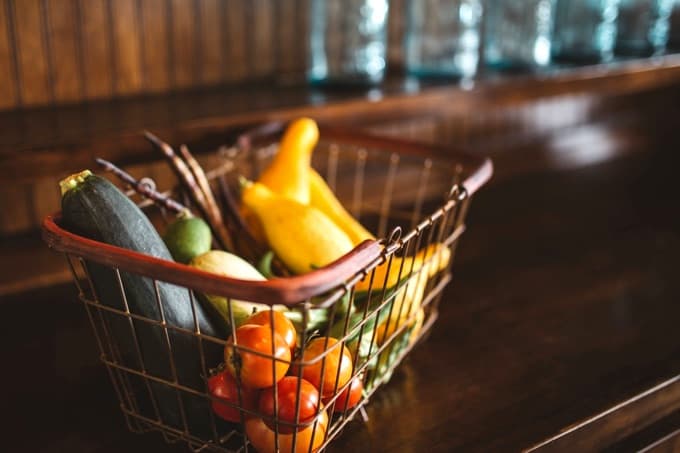
- Zucchini — sliced into ¼-inch rounds for quick, even cooking. Yellow summer squash is a perfect swap or addition — they cook at the same rate and look beautiful together.
- Yellow summer squash — mild and slightly sweet, it pairs naturally with zucchini. If you only have one or the other, just use more of what you have.
- Fresh mushrooms — cremini (baby bella) mushrooms have the most flavor, but white button mushrooms work perfectly well. Slice them evenly so they cook at the same rate. Pat them dry before cooking—wet mushrooms steam instead of sauté and won’t brown properly.
- Grape or cherry tomatoes — halved so they soften and release their juices into the skillet. Regular diced tomatoes work in a pinch, though they release more liquid.
- Green onion — adds a mild, fresh bite at the end. A small shallot or a few tablespoons of diced yellow onion sautéed at the start are both good alternatives.
- Olive oil — just one tablespoon for the whole skillet, divided across six servings. This is what contributes the 1 WW Point per serving. A light spray of olive oil cooking spray can be substituted to reduce points further, though you’ll get less browning.
- Garlic salt — simple and effective. Fresh minced garlic sautéed in the oil before adding the vegetables is even better if you have it. Italian seasoning, herbs de Provence (affiliate link), or any blend you love works beautifully here.
How Many Calories and WW Points?
According to my calculations, each serving of this veggie sauté has about 40 calories.
WW Points: 1
To see your WW Points for this recipe, track it in the WW App!
(You must be logged into WW on a smartphone or tablet.)
1 PointsPlus (Old plan)
How to Make Vegetable Skillet, Step by Step
Step 1: Prep your vegetables — slice the zucchini and squash into ¼-inch rounds, slice the mushrooms evenly, halve the tomatoes, and slice the green onion. Pat the mushrooms dry with a paper towel.
Step 2: Heat the olive oil in a large skillet (affiliate link) over medium-high heat until shimmering.
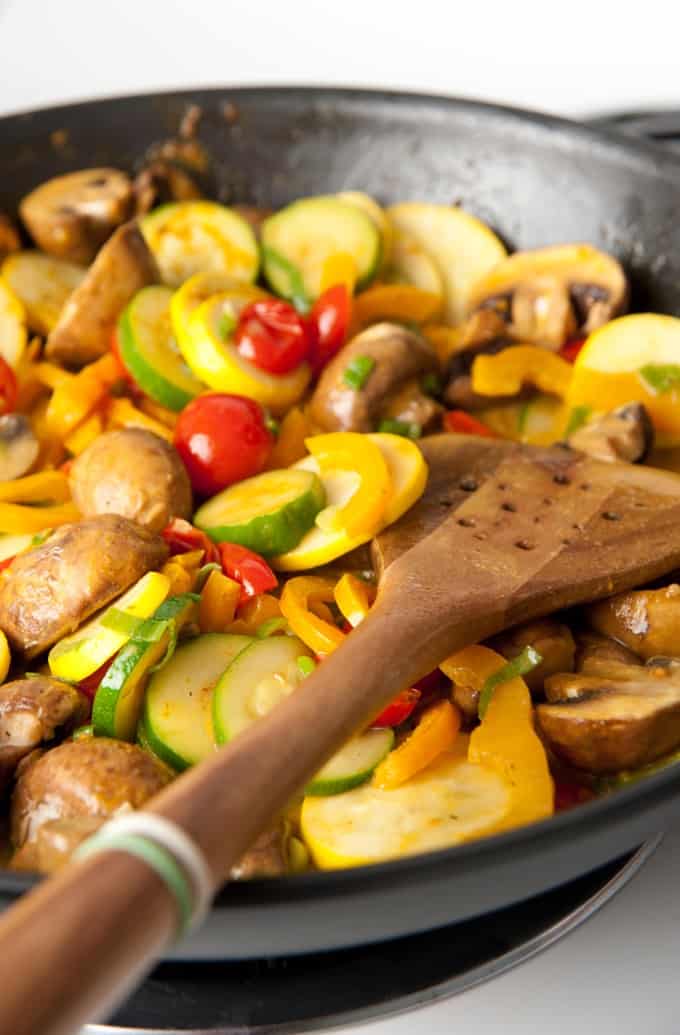
Step 3: Add the zucchini, yellow squash, and mushrooms. Cook, stirring frequently, until the vegetables are crisp-tender and beginning to pick up a little color, about 5 minutes.
Step 4: Add the tomatoes, green onion, and garlic salt. Continue cooking, stirring frequently, until the tomatoes begin to soften and release their juices, about 3 to 4 minutes more.
Step 5: Taste and adjust seasoning—a little extra salt, a pinch of black pepper, a squeeze of lemon, or a handful of fresh herbs can all make a difference. Serve immediately.
Tips for Success
- Don’t crowd the pan. This is the single most important tip for a great vegetable sauté. If the vegetables are piled on top of each other they’ll steam instead of sauté, turning soft and watery rather than developing those beautiful caramelized edges. Use a large skillet (affiliate link)—at least 12 inches—and work in batches if needed.
- Pat the mushrooms dry. Mushrooms hold a lot of moisture. A quick pat with a paper towel before they go in the pan makes a real difference in how well they brown.
- Get the pan hot before you add the oil. A properly hot pan means the vegetables start sautéing immediately rather than sitting in cooling oil. You’re looking for the oil to shimmer before anything goes in.
- Add the tomatoes last. They cook much faster than the other vegetables and release a lot of liquid. Adding them in the final few minutes keeps them from turning the whole skillet watery.
- Season at the end and taste. Different vegetables release different amounts of liquid and natural sweetness as they cook. A final taste and adjustment—more salt, a squeeze of lemon, a pinch of red pepper flakes—makes the difference between good and great.
- Make it in the oven too. Toss the vegetables with the oil and seasonings, spread them on a sheet pan, and roast at 425°F for 20–25 minutes. You get even more caramelization and concentrated flavor. One reader covers the dish and bakes at 350°F for 20 minutes with equally good results.
Ways to Customize This Skillet
This is where the fun begins. Think of the base recipe as a starting point:
- Different vegetables: bell peppers, onion, corn, eggplant, asparagus, broccoli, spinach, snap peas — use whatever looks good and is in season. Root vegetables like sweet potato or butternut squash work too but need a few extra minutes.
- Different seasonings: Italian seasoning, herbes de Provence (affiliate link), smoked paprika, cumin and chili powder for a Southwestern spin, or fresh herbs like basil, thyme, or parsley stirred in at the end.
- Cheesy: a sprinkle of Parmesan, crumbled feta, or fresh mozzarella added in the last minute of cooking takes this somewhere special. Reader Connie adds feta with Italian herbs and loves it.
- Spicy: a pinch of crushed red pepper flakes added with the garlic.
- Hearty — turn it into a meal: stir in sliced cooked chicken breast, shrimp, scallops, turkey sausage, tofu, or a can of drained white beans. Any lean protein works beautifully and makes this a complete one-dish dinner.
Storing and Reheating
Store leftovers in an airtight container in the refrigerator for up to 3 days. The vegetables will soften further as they sit—still delicious, just less crisp.
Reheat gently in a skillet over medium heat for a couple of minutes, or microwave (affiliate link) in 30-second intervals until warmed through. Leftover vegetable skillet is wonderful stirred into scrambled eggs, spooned over grains, or tucked into a wrap the next day.
If you’ve made this healthy Vegetable Skillet, please give the recipe a star rating below and leave a comment letting me know how you liked it. And stay in touch on Pinterest, Facebook, Instagram and Twitter for the latest updates.
Easy Zucchini Tomato Mushroom Skillet Recipe
Ingredients
- 1 tablespoon olive oil or vegetable oil
- 1 medium zucchini, cut into 1/4-inch thick slices (about 1 cup)
- 1 medium yellow summer squash, cut into 1/4-inch thick slices (about 1 cup)
- 1 cup sliced fresh mushrooms (about 3 ounces)
- 1 cup grape or cherry tomatoes, sliced in half
- 1 green onion, sliced
- 1/2 teaspoon garlic salt
Instructions
- In a large skillet, heat oil over medium-high heat.
- Add the zucchini, yellow squash and mushrooms. Cook, stirring frequently until the vegetables are crisp-tender, about 5 minutes.
- Add the tomatoes, green onion and salt and cook, stirring frequently, until the tomatoes begin to soften, an additional 3 to 4 minutes.
- Season with additional salt and pepper if desired.
Notes
(Must be logged into WW on a smartphone or tablet.) 1 PointsPlus (Old plan) Variations:
- Different vegetables: onion, bell pepper and/or corn would be nice.
- Different seasonings: basil, oregano, cilantro, parsley, thyme, marjoram, etc.
- Spicy: crushed red pepper flakes.
- Cheesy: grated Parmesan, fresh mozzarella, or feta would be nice.
- Hearty: the addition of sliced chicken breast, shrimp, scallops, tofu, sausage, canned drained beans (or any other favorite lean protein) could easily turn this into a healthy one-dish meal.
- Make it in the oven too. Toss the vegetables with the oil and seasonings, spread them on a sheet pan, and roast at 425°F for 20–25 minutes. You get even more caramelization and concentrated flavor. One reader covers the dish and bakes at 350°F for 20 minutes with equally good results.
Nutrition
Nutrition information is automatically calculated, so should only be used as an approximation.
Source: adapted from Betty Crocker Cookbook: 1500 Recipes for the Way You Cook Today (affiliate link)
Frequently Asked Questions
The oil is 4 WW Points — why does the recipe say 1 Point per serving?
The recipe uses 1 tablespoon of olive oil total, divided across 6 servings. That works out to ½ teaspoon of oil per serving—which is 1 WW Point, not 4. It’s an easy thing to miss if you are calculating per recipe rather than per serving.
Can I make this ahead of time?
You can, though it is best fresh from the skillet when the vegetables still have some texture. If making ahead, slightly undercook the vegetables so they don’t go mushy when reheated.
Can I use frozen vegetables?
Fresh is strongly recommended here—frozen vegetables release too much water and won’t sauté properly. If frozen is all you have, thaw them completely and pat them very dry before cooking.
Can I make this without oil?
You can use a light spray of olive oil cooking spray instead of a full tablespoon, which will reduce the points to 0. The vegetables won’t brown as deeply, but the result is still good. A splash of broth or water can also help prevent sticking.
What protein works best if I want to make it a meal?
Shrimp and sliced chicken breast are my favorites—they cook quickly and don’t overwhelm the vegetables. Turkey or chicken sausage adds great flavor. White beans or chickpeas make it a satisfying vegetarian meal.



I doubled the recipe, as my family enjoys, and used a small yellow onion sliced, added garlic to saute and feta, along with italian style seasonings, basil, oregano, parsley…….delicious.
Super easy and yummy
I love this. I did add some garlic and Italian seasoning. I also have doubled it and covered the dish and baked it for 20 minutes at 350. Great that way, too
what is the difference between pointplus and smartpoints and ?
Hi Ashifa,
Weight Watchers tends to change its plan every few years based on the latest nutrition and weight loss research. SmartPoints is the latest plan, which was introduced about one year ago. PointsPlus was the plan immediately preceding SmartPoints. PointsPlus is calculated by entering a food’s fat, fiber, carbs and protein into a WW PointsPlus calculator. SmartPoints are calculated by entering a food’s calories, sugar, protein and saturated fat into a WW SmartPoints calculator. Hope this helps.
A tablespoon of olive oil is 4 smart points.
Jodi, The recipe has 1 tablespoon of oil and makes 6 servings and clearly states that it is 1SP per serving!
I make so many vegetables to eat just for me, I didn’t see it as serving size for 6, ha! Thanks for the quick response.
You are most welcome Jodi 🙂