
This post may contain affiliate links. Please read our disclosure policy.

Reading and implementing what I learned from the book Mindless Eating was a real turning point in my weight loss journey.

It was the tipping point that led to achieving the peace with food I’d been seeking while maintaining the Weight Watchers goal weight I’d set back in my late 20s.
Table of Contents
- 6-Week Mindless Eating Challenge Background
- 6-Week Mindless Eating Challenge Schedule
- Week #1: My Notes and Thoughts on Mindless Eating: Why We Eat More Than We Think Chapters 1 and 2
- Notes from the Introduction Of Mindless Eating: Why We Eat More Than We Think
- Video Discussing Mindless Eating Chapters 1 & 2
- Notes from Chapter 1 of the Book Mindless Eating: Why We Eat More Than We Think
- Notes from Chapter 2 of Mindless Eating: Why We Eat More Than We Think
- More Articles, Tips & Hints for WeightWatchers
6-Week Mindless Eating Challenge Background
Now more than a decade later, as I settle in at the scene of this healthy exploration (Land O’ Lakes, WI), I thought it would be fun to create a 6-week Mindless Eating Challenge to help others experience what I discovered.
While Weight Watchers friendly recipes are important, they are only one part of the equation. Learning how to manage our environment and develop healthy habits are the critical elements of lasting weight loss success.
Mindless Eating: Why We Eat More Than We Think (affiliate link) helped me see this.
But it’s not enough to just read a book. You have to practice what you discover. Which is what this challenge is all about.
“I hear and I forget. I see and I remember.
I do and I understand.”
~ Confucius
For this challenge, we will all read Mindless Eating: Why We Eat More Than We Think (affiliate link) and share our awarenesses and experiences. Every week for six weeks, from July 10 – August 14, we’ll read two chapters a week and share what we learn.
I’ll kick things off every Monday with a post, which will give provide participants a place to comment with their discoveries, if they’d like.
It seems like a perfect summer project: A virtual book club, but with homework 🙂
To be most effective, this challenge is best undertaken in a low key “let’s just see what we discover” manner. No pressure. No way to fail.
But it does provide a bit of accountability if you find it helpful in propelling you into action.
All you need to do to take part is buy the book Mindless Eating: Why We Eat More Than We Think (or borrow it from your library).
Here’s the basic schedule:
6-Week Mindless Eating Challenge Schedule
- Why I’m Doing This 6-Week Mindless Eating Challenge
- Mindless Eating Challenge Kick-Off
- Week #1: July 10 – Chapters 1 and 2
- Week #2: July 17 – Chapters 3 and 4
- Week #3: July 24 – Chapter 5 and 6
- Week #4: July 31- Chapters 7 and 8
- Week #5: August 7- Chapters 9 and 10
- Week #6: August 14 – Appendix B and Wrap-Up
Week #1: My Notes and Thoughts on Mindless Eating: Why We Eat More Than We Think Chapters 1 and 2
The Bottom Line: There’s nothing wrong with you. We were designed for the “see food” diet. It’s natural to eat food that we see and that is readily available. This made sense in a world where food was sometimes plentiful and sometimes scarce. The problem is that today food is TOO PLENTIFUL (for those who struggle with our weight, anyway).
You need to learn to set up an environment that supports your desire to eat better and lose weight. This is your work. You will need to practice for a while. Breaking old habits and forming new ones takes time, but it is worth it!
Weight Loss Strategies:
- Think 20% more or less. Dish up 20% less than you think you want. Increase fruits and veg by 20% to make up for the difference.
- Pre-plate your food. Avoid serving anything except fruits and vegetables family style.
- Avoid seconds. Wait at least 20 minutes before eating more. Gives time for stomach and brain to know you are full.
- Don’t eat directly from boxes, bags, containers, packages. Portion out your food and put it in a dish.

Notes from the Introduction Of Mindless Eating: Why We Eat More Than We Think
- Everyone of us eats how much we eat largely because of what’s around us.
- Most of us are blissfully unaware of what influences how much we eat.
- We think we are too smart to be tricked by things like packages, plates and lighting. That’s what makes it so dangerous!
- This approach is not about dietary extremism.
- You can re-engineer your environment so you can eat what you want without guilt and without gaining weight.
- Food is a great pleasure.
- We need to shift our surroundings to work with our lifestyle instead of against it.
- You need to remove the environmental cues that lead to overeating.
- You need to redesign your kitchens and habits.
- The best diet is the one you don’t know you are on.
Video Discussing Mindless Eating Chapters 1 & 2

Notes from Chapter 1 of the Book Mindless Eating: Why We Eat More Than We Think
- People eat more when given a bigger container. Even when they are not hungry and/or the food doesn’t even taste good!
- The “Popcorn Experiment” shows how frail willpower is. People served a large popcorn bucket ate 173 more calories (53% more) than those given a medium container, even though the popcorn was stale and many folks had just eaten lunch so they weren’t hungry.
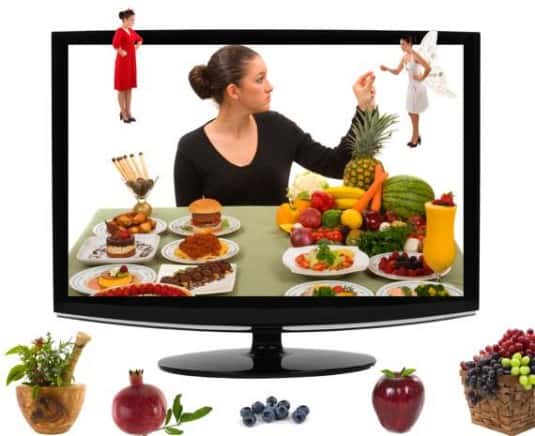
- Our body fights against them. We are designed for survival in a feast or famine world. This design works against us in our modern all-you-can eat world where food is too plentiful, but our instincts are still programmed to eat as much as we can as often as we can.
- Our brain fights against them. If we consciously deny ourselves something we are likely to end up craving it more and unlikely to stick with it.
- Our day to day environment fights against them. We are bombarded my sights and smells encouraging us to eat. Fast food, convenience stores, vending machines, television commercials all signaling us to eat.

- The “Mindless Margin” is a calorie range that we are unaware of. If we eat way too much or way too little we know it. But small differences of a couple hundred calories don’t register with our bodies or minds. They are too small to notice. These little differences repeated day after day can cause us to slowly gain or lose weight.
- Cutting just 100 calories/day: would prevent weight gain in most of the US population. (Classic article published in the journal Science.) Click here for some easy ways to cut 100 calories/day.
- Divide calories/10: to determine how much weight lost in a year by cutting out a number of calories per day. For example: if you eliminate 150 calories a day at the end of the year you will be 15 pounds lighter! If you cut out 250 calories a day, at the end of the year you will be 25 pounds lighter!
- Easy weight loss strategy: Trim 100-200 calories/day in a way that doesn’t make you feel deprived and you will slowly and steadily lose weight without pain or suffering! Click here for some easy ways to cut 100 calories/day.

- Focus more on HOW MUCH you eat rather than what you eat.
Notes from Chapter 2 of Mindless Eating: Why We Eat More Than We Think
- We all suffer from food amnesia. We are not designed to accurately track what we have eaten.
- We need external benchmarks to tell that we are gaining weight or losing weight:
- fit of our jeans
- notch of our belt
- energy level walking up stairs
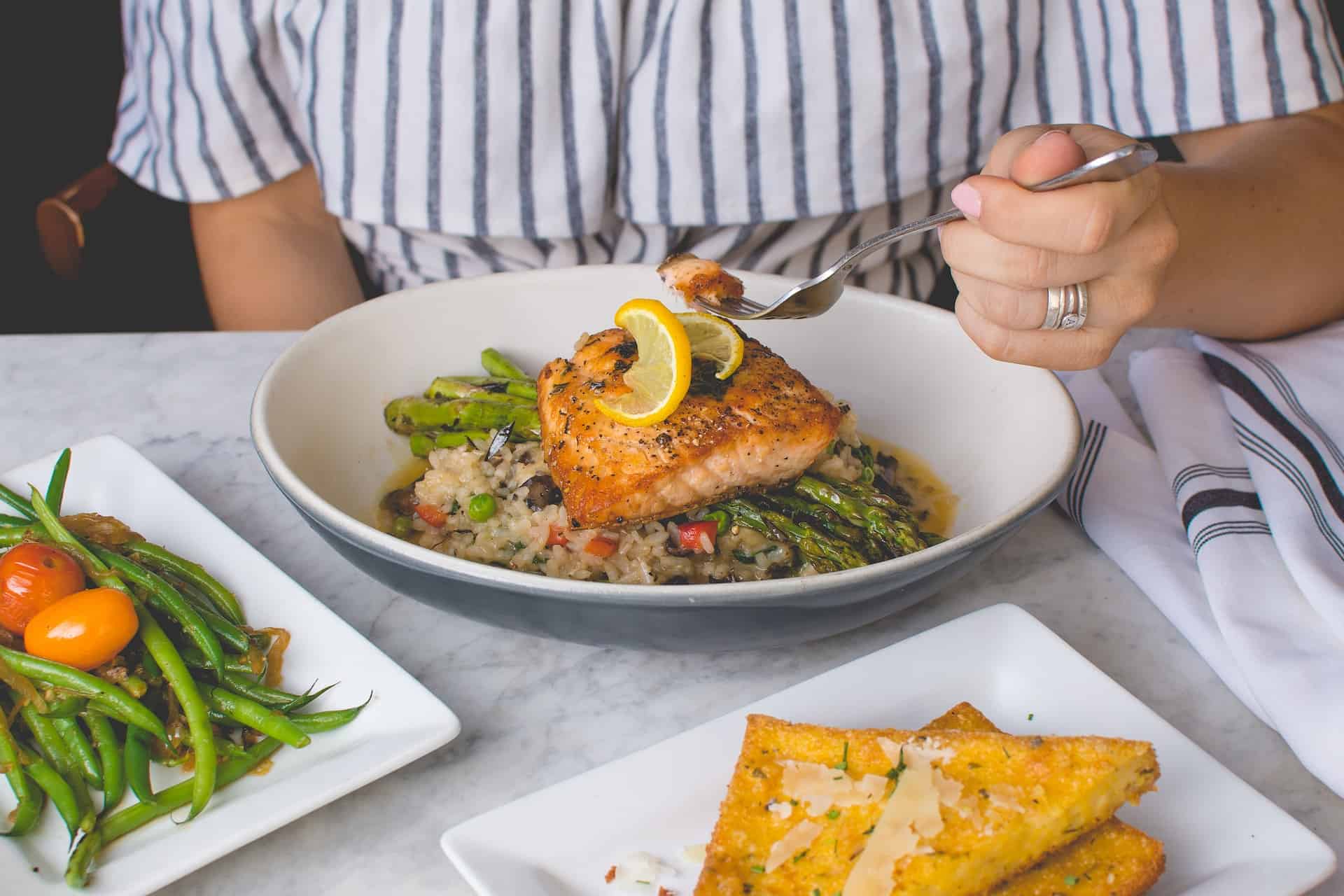
- We believe our eyes, not our stomaches. Research shows that people get full by the amount of food they eat, not the number of calories they take in. You can cut calories in your favorite foods by lowering the amount of fat and or increasing the amount of fiber-rich ingredients, such as vegetables or fruit.Click here for more ideas on how to lighten up your recipes so you can eat the same amount of food, but with fewer calories.
- We are terrible estimating the number of calories we eat. Normal weight people underestimate by about 20% Obese people underestimate by 30-50%.
- The bigger the meal the more we will underestimate its calories.
Questions to Consider:
- What were your biggest takeaways from Chapters 1 and 2 of Mindless Eating?
- What strategies have you implemented? What have you discovered?
- What surprised you most about the North Dakota wine study?
- Do you agree that volume trumps calories and our stomachs are bad at math?
- What is your typical cue to stop eating? Do you usually finish everything on your plate? Why or why not?
I’ll be back next week with my notes from Chapters 3 and 4.
Have a great week!
Warmly,
Martha
More Articles, Tips & Hints for WeightWatchers
- A Comprehensive Guide to Understanding the WeightWatchers Program
- A Comprehensive List of Articles & Tips for WeightWatchers
- What Foods Should I Eat in a Day on WeightWatchers
- WeightWatchers Zero Points Foods List
- WeightWatchers Friendly Meal Plans
- Why We Are More Motivated the Closer We Get to Our Goals – Another powerful WW Weekly Workshop Topic.



I very much like the idea of giving up 100 to 150 calories a day!!
I’m just partway through Chapter 2, and I’m totally hooked!! I’m excited to share what I’m learning with my husband and 2 kids (they’re teenagers so I have no expectation that they’ll actually listen…). I borrowed the book from the library, however I’m considering buying it too. It seems to be a great reference, a fast read, and worth going over several times. Thank you Martha for suggesting this virtual book club – what a great idea!
Hi Faith,
Thanks for sharing your thoughts. I had the same initial reaction 7 years ago. I agree that
this book is a reference that is worth returning to from time to time. So glad you are finding
this virtual book club helpful! – Martha
I’ve just been told by my physician that I need to love 10% to start IVF treatment. After struggling with infertility for 4 years, that’s the last thing I wanted to hear. But if it helps… The book recommendation couldn’t have come at a better time. I have a relationship with food that I’d like to change. I’m hoping this book and the support from all of you will get me to my goals (losing weight and having a little one).
Hi Aline, I hope this book and challenge are able to support you in your goals. Please know that I’ll be cheering for you 🙂
I love this Challenge! I read the first two chapters and one thing that I started doing was to See ALL that I eat. Today I decided to not care how messy my desk looked at work. I was not going to throw any snacks, non-water drinks, or candy wrappers in the trash. It was very eye-opening. I drink three sodas and a bag of cookies. Normally, I just keep my desk clean by throwing out my trash when I get up. I probably would have had more if I hadn’t seen what I’ve already done.
I also checked this book out of the library and now I realize that I should buy the book. This is one book that I can’t read through just once and not write in.
Wow Jenny! I love how you kept all the the snack, candy and non-water drink remains on
your desk to get a visual of how much you had eaten! I agree that this isn’t a book
that you just read once. I refer back to it regularly and always seem to discover something new.
My biggest challenge is eating popcorn “every night” while watching my 2 shows. I really underestimated how many WW points I was eating.
After reading the popcorn trial – I realized that I too eat as much popcorn as is in the container.
Last night was quite a challenge BUT I was determined to not make any and believe it or not – I survived.
I am going to half the amount of popcorn when I make it and ONLY when I have enough points left to cover it. Which of course means minimizing my points for the days I really want to have it..
What a powerful discovery Bonnie. I too have a real love of popcorn
and eat too much of it whenever I go to the movies. Fortunately, I don’t
get there very often! I like your idea of making half as much when you
really want it and cutting back in other areas to make sure you have
the points available. A great way to take control while still allowing
yourself what you really want.
Just started the book, but I could see myself in so many of the scenarios. I am a volume eater and have adopted a much healthier diet, but volume is still my biggest challenge so weight loss comes very slowly. I look forward to each chapter and understanding how I relate to food. Thanks so much Martha for bringing this challenge!
Hi Barb, it sounds like you know yourself very well which is good. Awareness is always the first step in changing behavior. I’m so glad you are enjoying this challenge. – Martha
Most of this information is not new to lifetime dieters, but his methods of delivering it makes you think SO differently. Love the science and studies he presents. The mere facts that only 150 calories a day over a year can cause a 15 weight loss ALSO shows how we have gained so much weight!! Wow!
It was also a wake-slap that we use only external cues rather than internal. and that volume trumps calories. He is really making me think.
Hi Susan, so glad to hear that the way he is presenting his study results is making you think. I had the same reaction 7 years ago and am still learning from this book.
I have read the assigned chapters and am not too surprised at some of the findings. I do have to say that in general I eat by the clock or when I can, it is not always easy to only eat when I am hungry (especially with a family). In general I am pretty good with eating my regular meals and correct portions. MY biggest problem is eating inbetween, when I get upset or aggrevated or …… I guess it would be that old “emotional eating” that is my biggest problem, and I’m waiting to see if that will be addressed in this book.
I do tend to deprive myself when I won’t have the rice, or french fries, or pasta at a meal. I might also turn down a donut or cookie, but later on (if not the same day, then the next), I will go through the panty just eating everything in sight, probably to try and get what I passed up. The amount of calories I would have saved if I had just had even a little bit of the “forbidden food” vs raiding the pantry!
One more wierd thing I do is, at night when fixing the next days lunch for my hubby to take to work, I just start eating what is in front of me. A piece of bread here, a slice of turkey there. I am not hungry, and I am not emotional, it just seems like an uncontrollable habit. And I normally don’t nibble while fixing any other meals.
My eyes were opened A LOT! I found the studies to be particularly interesting and very insiteful – learning the “why” behind so many of the things we/I do when it comes to not just eating food, but even shopping for it. Even after reading the first two chapters, I did a “mindless eating” move today…Met hubby for lunch and even though I had finished my sandwich and had already had a good amount of the baked chips, there was that moment where I could of stopped eating what was left, but did I? No! Was I still hungry? No! Later I realized not only was that a mindless eating moment (although not completely mindless because I actually did give it a second or two of thought), but just getting chips along with the sandwich is the thing to do, right? Having a sandwich, well you get chips to go along with it of course, just like fries since you ordered a cheeseburger, and eat crackers because you’re having cheese. Grrrr! Ingrained thoughts/behaviors…Looking forward to reading/learning more and turning my thought pattern around.
Dr. Wansink’s droll tongue-in-cheek humour made the read a very easy one. I recognized myself in many of his scenarios and for the first time asked myself why and how. Some time ago I had bought a pad of menu sheets and every Sunday would fill in my menus for the week and was so good at following them!
EXCEPT for the times I would eat not one but two chocolate bars at 4 p.m. just because I was tired and deserved it and it was there and I had gotten into the habit of doing so. THEN decided I had to give up the chocolate and would have protein bars instead. After all, they’re healthy and good for you (Quest mocha chocolate are delicious) but 2 a day at 200 or so calories each sure add up and stall weight loss.
But I’m so good at eating what my menu sheets tell me and even eat off the portion control plates I got at Weight watchers.
So the scenarios in the first two chapters really got me to thinking how they applied to me. Both the chocolate and protein bars were right at the check out counters and without even thinking, I grabbed them to perk me up and one visit became two became three became a habit without any thought just because!
When you’re given information that makes you stop and think it’s so helpful in providing insight into the why and how and if nothing else is making me ask if the why is worth it!
I also liked his assertion that the best diet is one you don’t know you’re on
Thanks for your starting this book club – I also see myself in the comments before mine and it”s comforting to know that others have the same experiences and you have given us a forum to learn from each other !
Thank you for doing this book discussion. I am definitely trying the “eat 20% less”. I too, eat everything on my plate. Whether I am at home or at a restaurant I feel like I need to eat everything. If I portion my plate properly I can continue to eat everything on my plate at home. At a restaurant I need to learn when I’m no longer hungry and stop!