
This post may contain affiliate links. Please read our disclosure policy.

Reading and implementing what I learned from the book Mindless Eating was a real turning point in my weight loss journey.

It was the tipping point that led to achieving the peace with food I’d been seeking while maintaining the Weight Watchers goal weight I’d set back in my late 20s.
Table of Contents
- 6-Week Mindless Eating Challenge Background
- 6-Week Mindless Eating Challenge Schedule
- Week #1: My Notes and Thoughts on Mindless Eating: Why We Eat More Than We Think Chapters 1 and 2
- Notes from the Introduction Of Mindless Eating: Why We Eat More Than We Think
- Video Discussing Mindless Eating Chapters 1 & 2
- Notes from Chapter 1 of the Book Mindless Eating: Why We Eat More Than We Think
- Notes from Chapter 2 of Mindless Eating: Why We Eat More Than We Think
- More Articles, Tips & Hints for WeightWatchers
6-Week Mindless Eating Challenge Background
Now more than a decade later, as I settle in at the scene of this healthy exploration (Land O’ Lakes, WI), I thought it would be fun to create a 6-week Mindless Eating Challenge to help others experience what I discovered.
While Weight Watchers friendly recipes are important, they are only one part of the equation. Learning how to manage our environment and develop healthy habits are the critical elements of lasting weight loss success.
Mindless Eating: Why We Eat More Than We Think (affiliate link) helped me see this.
But it’s not enough to just read a book. You have to practice what you discover. Which is what this challenge is all about.
“I hear and I forget. I see and I remember.
I do and I understand.”
~ Confucius
For this challenge, we will all read Mindless Eating: Why We Eat More Than We Think (affiliate link) and share our awarenesses and experiences. Every week for six weeks, from July 10 – August 14, we’ll read two chapters a week and share what we learn.
I’ll kick things off every Monday with a post, which will give provide participants a place to comment with their discoveries, if they’d like.
It seems like a perfect summer project: A virtual book club, but with homework 🙂
To be most effective, this challenge is best undertaken in a low key “let’s just see what we discover” manner. No pressure. No way to fail.
But it does provide a bit of accountability if you find it helpful in propelling you into action.
All you need to do to take part is buy the book Mindless Eating: Why We Eat More Than We Think (or borrow it from your library).
Here’s the basic schedule:
6-Week Mindless Eating Challenge Schedule
- Why I’m Doing This 6-Week Mindless Eating Challenge
- Mindless Eating Challenge Kick-Off
- Week #1: July 10 – Chapters 1 and 2
- Week #2: July 17 – Chapters 3 and 4
- Week #3: July 24 – Chapter 5 and 6
- Week #4: July 31- Chapters 7 and 8
- Week #5: August 7- Chapters 9 and 10
- Week #6: August 14 – Appendix B and Wrap-Up
Week #1: My Notes and Thoughts on Mindless Eating: Why We Eat More Than We Think Chapters 1 and 2
The Bottom Line: There’s nothing wrong with you. We were designed for the “see food” diet. It’s natural to eat food that we see and that is readily available. This made sense in a world where food was sometimes plentiful and sometimes scarce. The problem is that today food is TOO PLENTIFUL (for those who struggle with our weight, anyway).
You need to learn to set up an environment that supports your desire to eat better and lose weight. This is your work. You will need to practice for a while. Breaking old habits and forming new ones takes time, but it is worth it!
Weight Loss Strategies:
- Think 20% more or less. Dish up 20% less than you think you want. Increase fruits and veg by 20% to make up for the difference.
- Pre-plate your food. Avoid serving anything except fruits and vegetables family style.
- Avoid seconds. Wait at least 20 minutes before eating more. Gives time for stomach and brain to know you are full.
- Don’t eat directly from boxes, bags, containers, packages. Portion out your food and put it in a dish.

Notes from the Introduction Of Mindless Eating: Why We Eat More Than We Think
- Everyone of us eats how much we eat largely because of what’s around us.
- Most of us are blissfully unaware of what influences how much we eat.
- We think we are too smart to be tricked by things like packages, plates and lighting. That’s what makes it so dangerous!
- This approach is not about dietary extremism.
- You can re-engineer your environment so you can eat what you want without guilt and without gaining weight.
- Food is a great pleasure.
- We need to shift our surroundings to work with our lifestyle instead of against it.
- You need to remove the environmental cues that lead to overeating.
- You need to redesign your kitchens and habits.
- The best diet is the one you don’t know you are on.
Video Discussing Mindless Eating Chapters 1 & 2

Notes from Chapter 1 of the Book Mindless Eating: Why We Eat More Than We Think
- People eat more when given a bigger container. Even when they are not hungry and/or the food doesn’t even taste good!
- The “Popcorn Experiment” shows how frail willpower is. People served a large popcorn bucket ate 173 more calories (53% more) than those given a medium container, even though the popcorn was stale and many folks had just eaten lunch so they weren’t hungry.
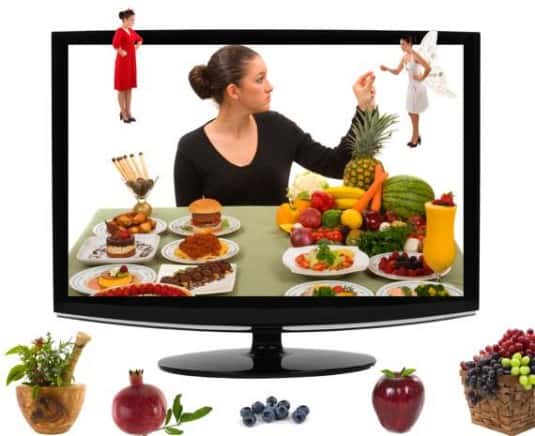
- Our body fights against them. We are designed for survival in a feast or famine world. This design works against us in our modern all-you-can eat world where food is too plentiful, but our instincts are still programmed to eat as much as we can as often as we can.
- Our brain fights against them. If we consciously deny ourselves something we are likely to end up craving it more and unlikely to stick with it.
- Our day to day environment fights against them. We are bombarded my sights and smells encouraging us to eat. Fast food, convenience stores, vending machines, television commercials all signaling us to eat.

- The “Mindless Margin” is a calorie range that we are unaware of. If we eat way too much or way too little we know it. But small differences of a couple hundred calories don’t register with our bodies or minds. They are too small to notice. These little differences repeated day after day can cause us to slowly gain or lose weight.
- Cutting just 100 calories/day: would prevent weight gain in most of the US population. (Classic article published in the journal Science.) Click here for some easy ways to cut 100 calories/day.
- Divide calories/10: to determine how much weight lost in a year by cutting out a number of calories per day. For example: if you eliminate 150 calories a day at the end of the year you will be 15 pounds lighter! If you cut out 250 calories a day, at the end of the year you will be 25 pounds lighter!
- Easy weight loss strategy: Trim 100-200 calories/day in a way that doesn’t make you feel deprived and you will slowly and steadily lose weight without pain or suffering! Click here for some easy ways to cut 100 calories/day.
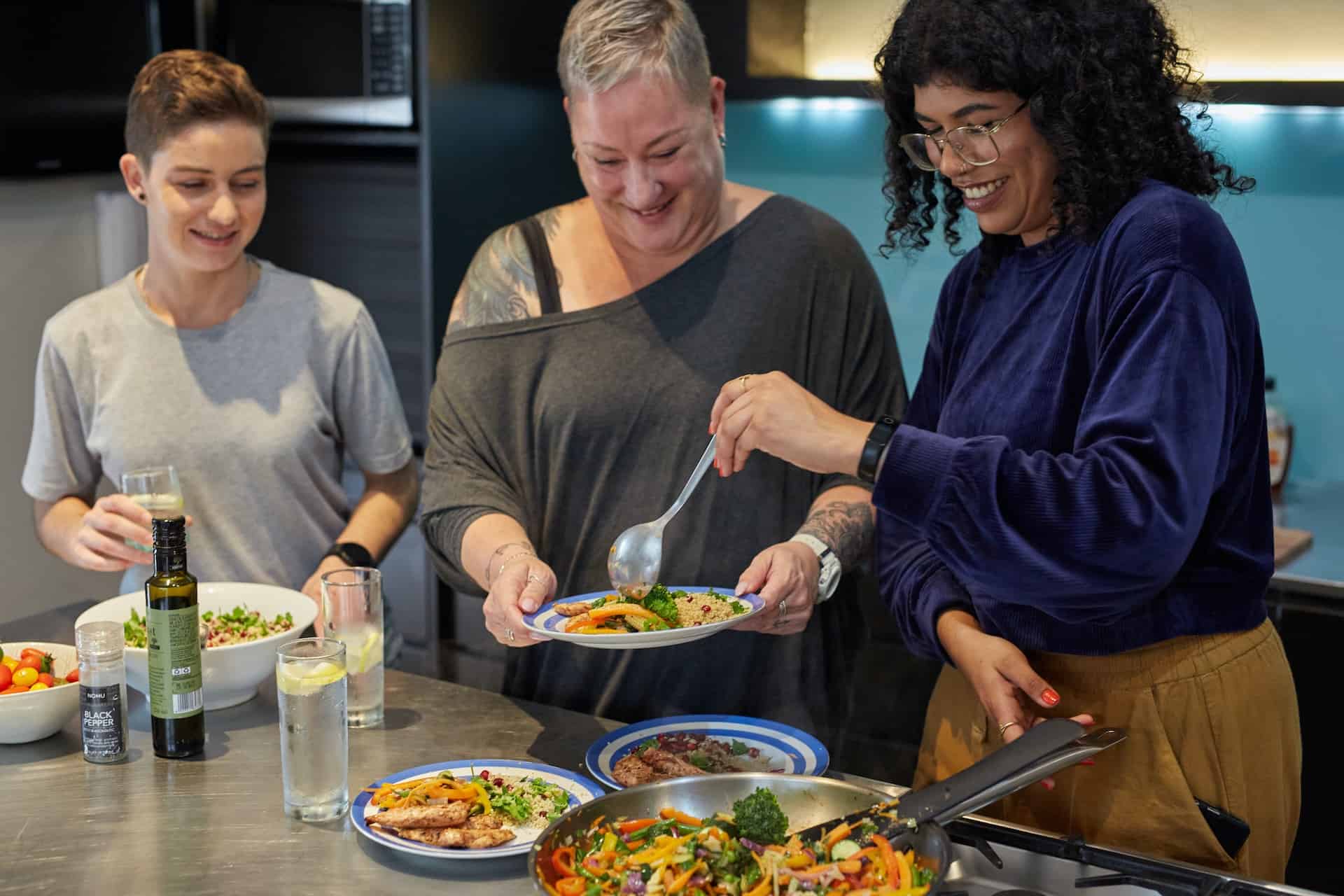
- Focus more on HOW MUCH you eat rather than what you eat.
Notes from Chapter 2 of Mindless Eating: Why We Eat More Than We Think
- We all suffer from food amnesia. We are not designed to accurately track what we have eaten.
- We need external benchmarks to tell that we are gaining weight or losing weight:
- fit of our jeans
- notch of our belt
- energy level walking up stairs
- We believe our eyes, not our stomaches. Research shows that people get full by the amount of food they eat, not the number of calories they take in. You can cut calories in your favorite foods by lowering the amount of fat and or increasing the amount of fiber-rich ingredients, such as vegetables or fruit.Click here for more ideas on how to lighten up your recipes so you can eat the same amount of food, but with fewer calories.
- We are terrible estimating the number of calories we eat. Normal weight people underestimate by about 20% Obese people underestimate by 30-50%.
- The bigger the meal the more we will underestimate its calories.
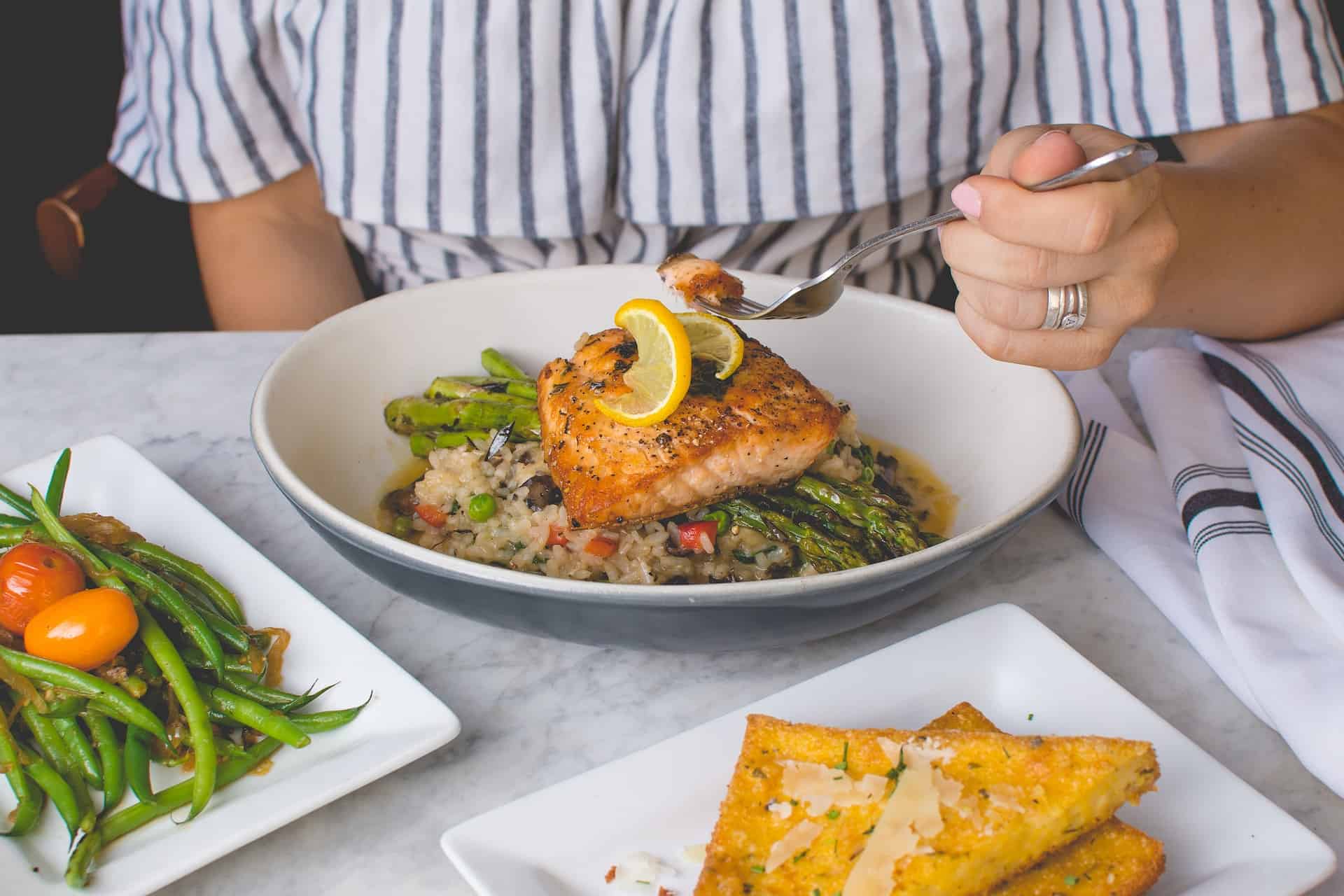
Questions to Consider:
- What were your biggest takeaways from Chapters 1 and 2 of Mindless Eating?
- What strategies have you implemented? What have you discovered?
- What surprised you most about the North Dakota wine study?
- Do you agree that volume trumps calories and our stomachs are bad at math?
- What is your typical cue to stop eating? Do you usually finish everything on your plate? Why or why not?
I’ll be back next week with my notes from Chapters 3 and 4.
Have a great week!
Warmly,
Martha
More Articles, Tips & Hints for WeightWatchers
- A Comprehensive Guide to Understanding the WeightWatchers Program
- A Comprehensive List of Articles & Tips for WeightWatchers
- What Foods Should I Eat in a Day on WeightWatchers
- WeightWatchers Zero Points Foods List
- WeightWatchers Friendly Meal Plans
- Why We Are More Motivated the Closer We Get to Our Goals – Another powerful WW Weekly Workshop Topic.



Hi Martha! I’m really liking this book so far – and the experiments with the people and popcorn, and the endless soup in same size bowl. Great visuals to go by! I’ve been a Lifetime WW member since 1999, slipped a few times, and back at/below goal now for 12 months. The new WW plan with all the “free foods” is scary for me – none of us are here because we have portion control skills! I think the you and the lessons in this book will definitely help with that! Smaller plates, for sure! And eating slowly, put down fork, take sips of water between bites. That all makes such a difference. Your timing for this couldn’t be better and I thank you from the bottom of my heart!
Hi Andrea, I agree with what you are saying about portion control. While it is great that WW Freestyle is helping us focus on the foods that comprise the foundation of a healthy diet – fruits, vegetables, lean proteins, beans/legumes, and nonfat yogurt – many of us who struggle with our weight tend to supersize our portions. I still remember my first day on WW back in the early 1990s when I weighed/measured out my breakfast cereal, milk and orange juice and discovered what a “serving” looked like. I had been easily eating 2,3, or even 4 times more!! Talk about an eye opener. I’ve never forgotten it. I think the awarenesses gained from reading this book are invaluable. I learn something new or remember something I had forgotten each and every time I read it.
I just realized I didn’t answer all your questions!
Strategies I’ve implemented so far – use a smaller plate. Seconds aren’t a problem for me, I eat what I put there, but snacks are a problem. I know I eat way too much fruit and too many carrots. I will cut those back a little!
I thought the wine study was very funny – I sent 25 years in San Diego and wine connoisseurs are such snobs – most anyway!!! And they probably wouldn’t touch a bottle with a ND label on it – ha!! I agree volume trumps calories and our stomachs are very bad at math – Thanksgiving being the best example! My cue to stop eating is that my plate is empty – and it’s up to me to not fill it as full! I started WW in 1974 when we had to eat liver and lots of fish. I hate liver!!! But fish is my friend!!! Looking forward to the next 2 chapters!!
Fascinated by the human lab research & how our eyes control our intake, not our stomachs! I grew up in the “clean your plate” club &, to this day, have trouble leaving food uneaten. But preplating & not going back for seconds helps me meet my goal. Also, tracking is critical for me. I now see why as I usually get into trouble when I “guesstimate”! Love the book. Your food blog is my favorite!
Pre-plating and not going back for seconds have been key for me too. I’m still amazed sometimes by how little it takes to satisfy my hunger if I can just force myself to slow down and give my brain a chance to catch up with my stomach!
This book is so interesting and informative. So many of the ideas can be implemented painlessly! Now I’m working on the pre-plating. One step at a time!
You are so right Suzanne. One step at a time. Slow and steady really does win the weight loss race in relatively painless sustainable way.
I’m finding the information in this book fascinating. As someone that works in the field of science, the data and conclusions from these studies makes a lot of sense.
What’s frustrating is, not only do we have to contend with marketers trying to subliminally or outright convince us to consume what we don’t need, our own natures do the same thing. Makes everything quite challenging if you’re not paying attention.
I’ve decided to try to miniaturize everything. I already have small plates, time to use them more often. I went and purchase 11.5 oz glasses for beverages that have points/calories. I filled one to the top with ice first and then poured in some pop. Then, I poured the pop into a measuring cup. It was only 8 oz of pop compared to the 16 oz or more in my larger glasses. Large glasses for water or unsweetened ice tea. Smaller glasses for pop, juice, etc. which, I don’t drink much of anyway.
I also discovered that, if you ask, some restaurants have snack size portions. For example, Arby’s has a snack size curly fry and a snack size Jamocha shake. Now, of course, this is not something you want to eat all the time but, if you’re going to splurge, at least you won’t do as much “damage” as with the full size options.
I bought the book a couple weeks before I received your first email stating you wanted to do the challenge. What a wonderful coincidence. I get to read, enjoy and share with you and others. Can’t wait to get back to the next chapters. Thanks for doing this.
Melody, talk about a happy coincidence! I so enjoyed reading your insights from the first few chapters. I agree that knowledge is power, especially with so many forces both natural and manmade – working against us!
Wow! Just the first 2 chapters have been an eye opener. I have a lot of work to do to get to where I want to be, but making changes a little at a time I know will help me be successful in the end. A couple of weeks ago in my WW meeting we learned about being assertive. That is where I need to start. This book gives me the information I need to start standing up for myself.
Hi Kim, glad you have found the first two chapter to be so eye-opening. I felt the very same way the first time I read them. You are so smart to stay focused on little changes over time. Yes, assertiveness is important when trying to change behavior. I wish you much success.
I bought the book a couple days ago and have just finished reading the first two chapters. I am a weight watchers leader who had a broken wrist and several bruised ribs. I was not able to work or exercise for a couple months. During that time I gained about 10 pounds. Last fall we went on a cruise and I gained an extra 5 pounds during that week. The combination of the two things seems to have me stuck. Now I’m having a heckuva time taking those 15 pounds off. I’ve been tracking regularly and staying to my 30 points but the scale just isn’t moving. I’m hoping doing this challenge will help me see other ways to get moving again. It’s hard to see where to shave 100 cal when you’re already eating what feels like a very limited amount.
Hi KT, if only those pounds came off as easy as they go on, sigh! So glad to have you as part of the challenge. Hope you find the secrets to getting those extra 15 pounds off 🙂
Love the book! If we are considering life long health then just in the first two chapters I found so many actionable ideas that I could weave into my daily life–plate size, preplating meals, don’t eat out of boxes/bags, repackage large quantities I buy at Costco into smaller(measured) portions. I am 65 and I know my mentalism is slower so in looking for 200 calories, I am thinking I should look for 300-400 a day to reduce. For me it is probably the snacking I do around 9:00 at night–easy to cut some calorie count here with some planning—and then just making a good choice here and there during the day and I think I am on my way.
Appreciate this book club–very helpful
JoAnn, so happy to read that you love the book! You are right about the wealth
of actionable ideas presented in the first 2 chapters. I like how you are approaching
trimming away 300-400 calories/day by cutting back on the evening snacks and making
better choices here and there. All will add up to lasting success 🙂
I got the book yesterday and just finished the first 2 chapters. Wow! I will be using the 20% less concept and to pre-plate our food! I had never given this any thought before but our environment is designed to make us want, and therefore eat, more – beautiful advertising, labels, etc. Thanks! Looking forward to the next 2 chapters!
Hi Suzanne, so happy to read how the first 2 chapters resonated with you too. It’s so powerful when you realize how much influence your environment is having on your food decisions.
This book offers good insight into keeping track of what I eat. I usually track my weight watchers smart points. Keeps me honest. It’s so easy to loose track especially on stressful days.
Thanks for doing this book, it’s a very helpful resource and offers good insight into the our behaviour.
Hi Debbie, you are so right about the power of tracking to keep us honest about what and how much we are eating! So happy to have you participating in this Challenge 🙂
Oh my gosh, I had an epiphany so many things, but the most clarifying was, for me that I can re-engineer where I eat my food. I have been sharing what I am reading with my husband and even hand over the book so we can get on the same page. The light bulb came on so many different times; relying on our eyes instead our ques that we have eaten enough. Plating and putting away the food after putting it on our plates. Having fruit and veggies within easy reach…..life is getting better and better 🙂
Marlys, Just reading your comments makes me so happy. It’s so exciting for me to have others experiencing the same light bulb moments I experienced reading this book the first time. Love that you are sharing it with your husband 🙂