
This post may contain affiliate links. Please read our disclosure policy.

Our leader posed a great question during my recent WW meeting:
Table of Contents
- What advice would you give a friend who just joined Weight Watchers?
- Advice to Weight Watchers from Behavioral Psychology Expert, BJ Fogg:
- 1. Go to weekly meetings/workshops
- 2. Learn Points and track
- 3. Never be hungry — eat all your points
- 4. Just aim to lose a bit of weight each week
- 5. Do strength training, but don’t punish yourself with too much cardio
- 6. Follow directions from WW
- 7. Forgive failures and keep going
- More Advice for Weight Watchers from Readers…
- More Support for Weight Watchers
What advice would you give a friend who just joined Weight Watchers?

Great question, right?
Many great thoughts and ideas were shared….
- Be patient.
- Journal.
- Track everything you eat.
- Use the tools (trackers, guides, etc.)
- It’s okay to make mistakes.
- Plan.
- Don’t get overwhelmed and try to change everything all at once. Start with small changes that you feel you can be successful with.
- Out of sight, out of mind. Remove your red light or trigger foods. The foods you lose control over.
- Ask for help.
- Go to your meetings. Losing weight takes support.
All great points to keep in mind wherever we are in our weight loss journey.
It reminded me of this post, where behavioral psychology expert, BJ Fogg, author of Tiny Habits (affiliate link), shared his advice for people doing Weight Watchers.

In the article, BJ explained that it took him seven months to earn “Lifetime Membership.” You become “Lifetime” when you reach your goal weight and stay there six weeks.
His goal was to prove that it’s possible to lose weight slowly and steadily without any real pain or deprivation:
Many people have the wrong idea about getting in shape. They believe they must suffer to lose weight or to build fitness. This idea is damaging because the pain approach stops people from continuing (Seriously . . . who wants to endure pain?). And the idea of “no pain, no gain” stops many people from even trying in the first place.

He concluded that the WW Program (affiliate link) clearly works and that there’s nothing gimmicky about it:
The program is not so much about motivation. The focus is on “how to.” You learn a bunch of skills and you change a bunch of habits.
The key, I believe, is to look at Weight Watchers as a long-term change in your life. You will be following this path for the rest of your life. It’s not a diet. It’s a permanent change in how you eat.
I’ve made this change, and I don’t feel deprived. I’ve learned to make some yummy food that has replaced food that wasn’t so healthy. But that’s not all. The program teaches you about portion control, what to do at parties, and on and on. You won’t learn it all at once.
I think it’s so cool that even a behavior expert found it helpful to use Weight Watchers to support himself in his desire to lose weight. His post went on to provide much useful advice…

Advice to Weight Watchers from Behavioral Psychology Expert, BJ Fogg:
- When you start Weight Watchers, don’t overdo it.
- Just change a few things the first week.
- Then change a few more things in your life the next week. And on and on.
- Take a slow and steady step-by-step approach.
- Be persistent and take a long-term view.
My belief is this: “The slower the change, the longer it lasts.”
1. Go to weekly meetings/workshops
The weekly meetings/workshops are fascinating. You’ll learn a bunch of tips and tricks from others who attend. The meeting leader has a short lesson each week. Participate in the lesson, with questions and comments.
I admire people who come to meetings. They are the ones — the few — who are really trying to improve their lives. As I see it, those who go to Weight Watchers are top-notch people. I made some great friends at the meetings.
I couldn’t agree more. WW Meetings keep me grounded in reality. I call them 30 minutes of sanity in an insane food world. I’ve made some great friends too.
2. Learn Points and track
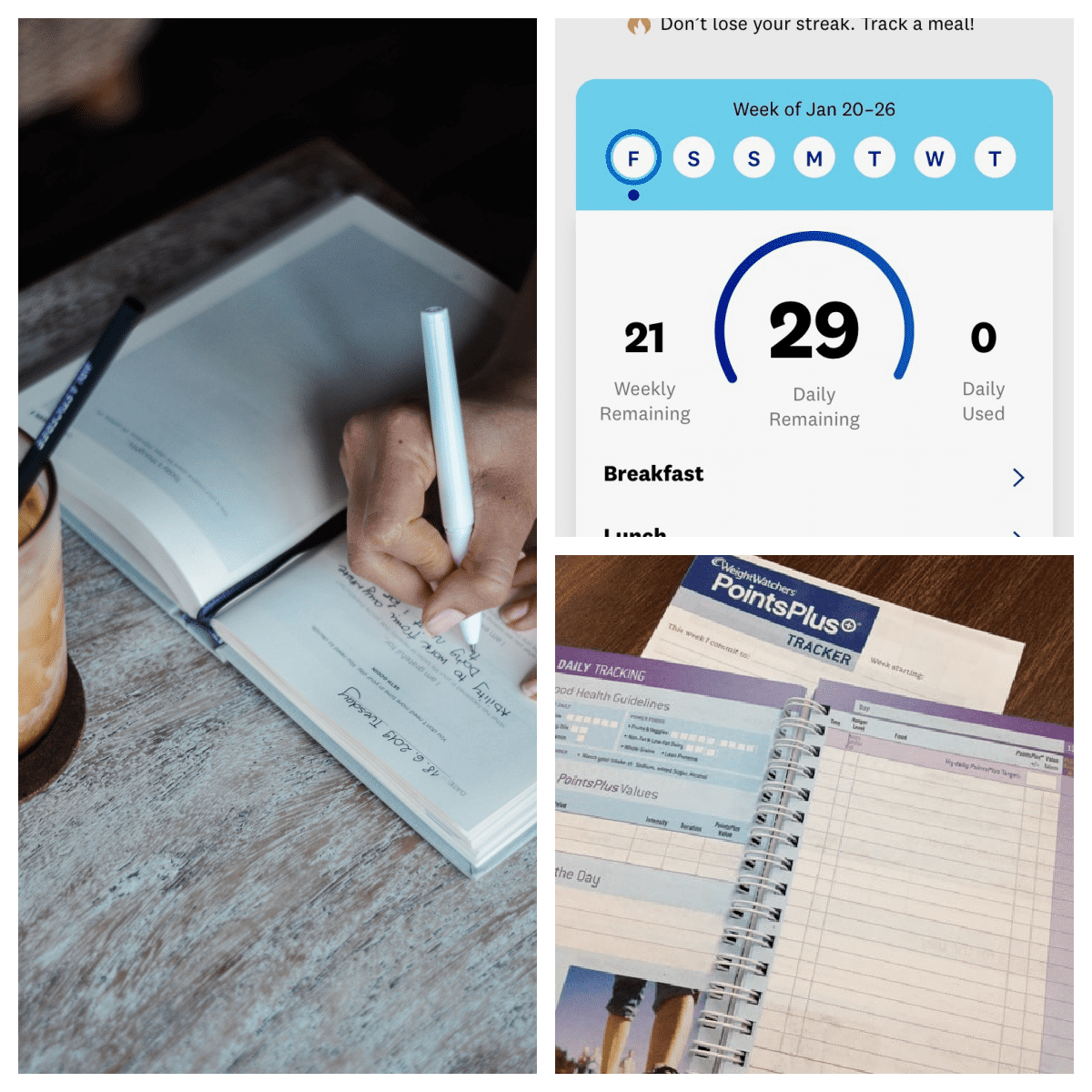
Tracking your food and activity is the hardest part of Weight Watchers. Why? Because it takes persistence. The good news: You don’t have to track food for the rest of your life. However, I strongly advise you to learn the system early (in the first few weeks) and to track until you really know how much you should eat each day.
The importance of tracking/journaling, at least in the beginning is undeniable and the #1 rule for Weight Watchers if you want to be successful.

3. Never be hungry — eat all your points
Each day I can eat 42 points worth of food (plus 0 points veggies and fruits). The obvious idea is to not exceed your points for the day or the week. But for me the real breakthrough idea was this: I should be eating 42 points each day. Eating just 32 is a mistake. In other words, you *should* eat all your points.
You can eat anything you want and not feel guilty.
Want ice cream? That’s fine.
Pizza? Fine.
Just mind your points.
On days I was hungry and near my point limit, I learned what to do: I would eat veggies, plain yogurt, fruit, more veggies . . . and it worked. The hunger went away, and I felt successful.
I think this is critical to remember and why WW is the only plan I’ve ever been able to stick to. I can have whatever I want. Nothing is off limits as long as I plan for it. As soon as I tell myself I can’t have chocolate or sugar or pizza, it’s all I can think about.
4. Just aim to lose a bit of weight each week
It’s not impossible to lose two pounds each week on Weight Watchers. But for me, that was too extreme. I didn’t want to suffer, because I know that humans will work to avoid suffering. So I took it at my own pace. I learned eventually this meant I would lose about 1/2 pound a week. That was fine with me.
My goal each week when I weighed in was to just weigh less than the previous week. That’s all. Even if it was one ounce less. And when I didn’t lose weight, I went back to tracking and careful monitoring of my food. (Note: I didn’t step up exercise. But that’s the next point)
I would add that it’s important to accept that there will be ups and downs and to accept it as part of the journey. Most people’s longterm weight loss trackers look more like an ekg report than a ski slope.
5. Do strength training, but don’t punish yourself with too much cardio
Surprise: You don’t have to exercise to lose weight. In fact, over the last 7 months I’ve exercised *less* than ever before in my life (I’ve been busy). But I did a good job of strength work, especially pushups and quads. I did all this mostly at home in short bursts (tiny habits for the win!)
I did cardio maybe once a week. That’s all.
From what I can tell, most people think you must do hours of cardio to lose weight. That’s a bad idea. It’s punishment — you huff and puff and you sweat. I know people will criticize me for this view, but I say cardio is the wrong place to focus if you want weight loss. Instead, use your time and energy to learn to eat differently. And build strength (pushups eventually get fun). And don’t make any of it too painful.
I couldn’t agree more, which is why exercise alone is a terrible weight loss strategy. After years of punishing myself with grueling exercise that I could never stick to, I found my happy healthy balance with walks and gentle yoga.
6. Follow directions from WW
The WW program works if you adhere to it. So just follow directions. Do what they suggest except don’t buy or eat their food. (Sorry WW Execs, but you already know my view: I think you should get out of the food business completely. Selling food detracts from the real genius of your program.)
I agree. I buy very little WW food. What I love about the plan is that it’s not necessary to buy any specific “diet” foods to succeed on the plan. In fact the fewer “diet” foods I buy the better off I am. I feel less deprived somehow. Of course, this is a personal choice.
7. Forgive failures and keep going
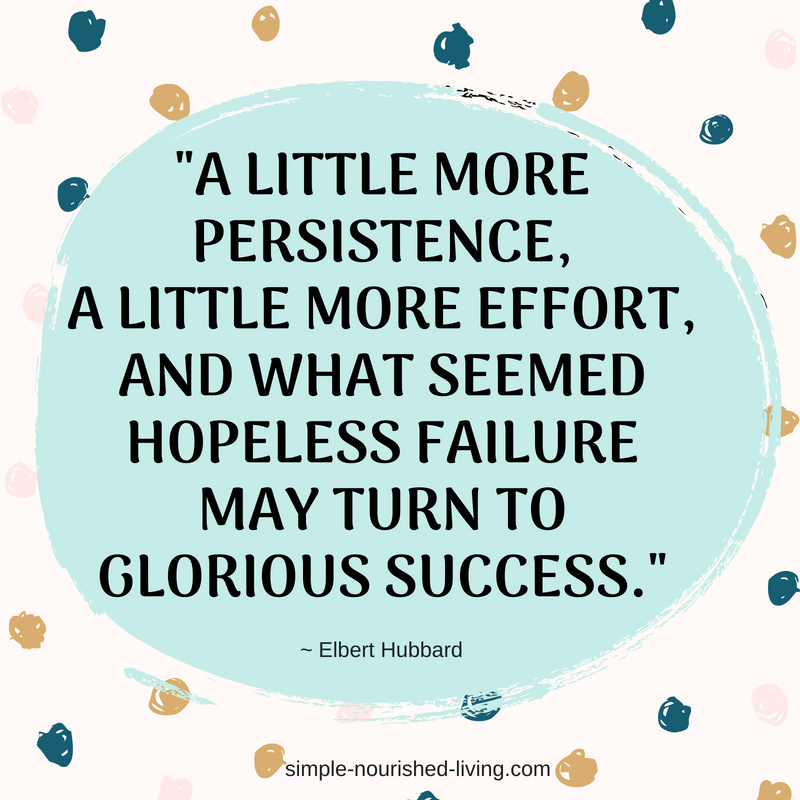
You won’t learn how to change all of your eating behaviors in a few weeks. You probably have lots of old habits you’ll need to replace. Do this little by little. Along the way, you’ll make mistakes. But just don’t take it too personally. Never feel guilty. Just keep going.
As long as you persist, you’ll reach your goal.
Realize that your real goal isn’t hitting an ideal weight. Instead, your real goal is to create a new set of eating habits that will benefit you for a lifetime.
I really couldn’t have said it better myself. I loved coming across this objective review of Weight Watchers from an expert in the field of behavior change, who is also a Lifetime member. I also loved what he said about admiring people who come to meetings. That they are top notch people who are really trying to improve their lives. Reading this review was like getting a big hug. It made me feel happy and warm all over.
Source: BJ Fogg

More Advice for Weight Watchers from Readers…
More Support for Weight Watchers
- 10 Mini Resolutions Perfect for WW in the New Year
- Daily Motivation Quotes for Weight Watchers
- 5 French Weight Loss Secrets that can Work for Weight Watchers
- Best Food Blogs for Weight Watchers Recipes
- Why We Are More Motivated the Closer We Get to Our Goals

Updated with new text and photos 1/2023


Link to the Fogg article doesn’t work.
Hi Regina, Thanks for letting me know. It appears to no longer be available on his site. ~Martha
Stick with it, it works!
Because so many of us are desperate when we finally show up, there’s one critical piece we don’t talk about nearly enough. We need to practce seeing ourslves succeeding, imagine ourselves on an obstacle course where we get slowed down or even briefly stymied by one of those obstacles, but finish the course triumphant. In short, we need to move beyond seeing (and believing) ourselves as healthy weight failures.
Good article! I lost almost 200 pounds over a period of years and have kept it off for over two years! I did it myself as I refused the idea of surgery after my poor health landed me in the hospital twice! I started on my own and after 50-60 pounds found a free online group to check in to Dailey with others doing the same. I learned a lot from many people! BUT the ONE thing that was a key for me was that this is not a diet, it must be a lifestyle! There is no end, just constant movement to health, changing bad habits, gathering information to continually improve and change in a positive direction! I stopped blood pressure medicine, all my medications for diabetes and no longer have severe breathing problems that required me to be on oxygen 24/7! I am an older adult and it took me this long to realize it’s a lifestyle you need for the rest of your life…not go on and back to eating another way! I hope this has helps someone else to make the change and see things differently!Oh,I still keep a food journal as it keeps thing clear in my mind and I find it helpful! I also weigh no more than monthly! I focus on how I feel and look!
Hi Mary, Congratulations on your 200 pound weight loss! Would love for you to share the details of your success with us here: https://simple-nourished-living.com/submit-your-weight-loss-success-story/ Thanks~ ~Martha
Track before you eat it. For example, we had ribs, potato salad, and a green salad for dinner this evening. I cut back on the potato salad to 1/3 cup and salad dressing to 1 tablespoon from 2 (or I could have used a lower point dressing) to be within my daily points. I would have been over if I had tracked after eating.
How do you get 42pts. If you go free style you get 23 and 35extra for the week.
Hi Louise, the number of points is dependent on your age, height, weight, gender and activity level. Hope this helps. ~Martha