This post may contain affiliate links. Please read our disclosure policy.
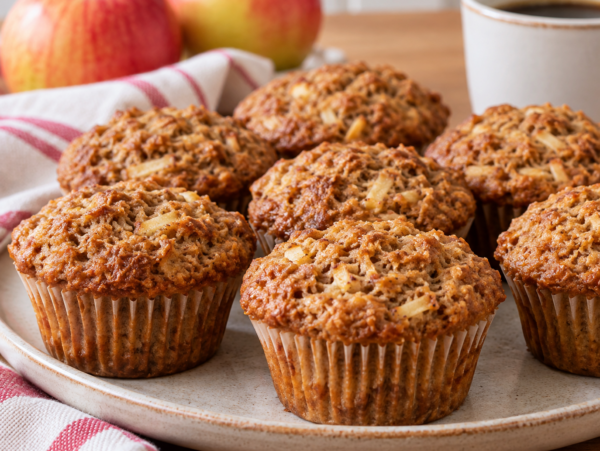
What if you could make all kinds of delicious homemade muffins without needing a different recipe every time?
That’s the idea behind Amy Dacyczyn’s wonderfully practical article, Create a Breakfast Muffin, from The Tightwad Gazette (affiliate link).
Amy believed that blindly following recipes wasn’t necessarily the best way to save money on groceries. Instead of sharing another muffin recipe, she wanted to teach readers the process of creating their own, using ingredients that were inexpensive, already on hand, or needing to be used up.
Her solution was a simple, flexible muffin formula that could be adapted in countless ways.
Leftover oatmeal? An overripe banana? A little breakfast cereal sitting in the pantry? They can all become part of a batch of homemade muffins.
I’ve been making muffins since my college days, beginning with the classic Kellogg’s All-Bran muffin recipe. All these years later, I still love a good homemade muffin, especially one made with ordinary ingredients I already have.
And the older I get, the more I appreciate this kind of practical, resourceful cooking.
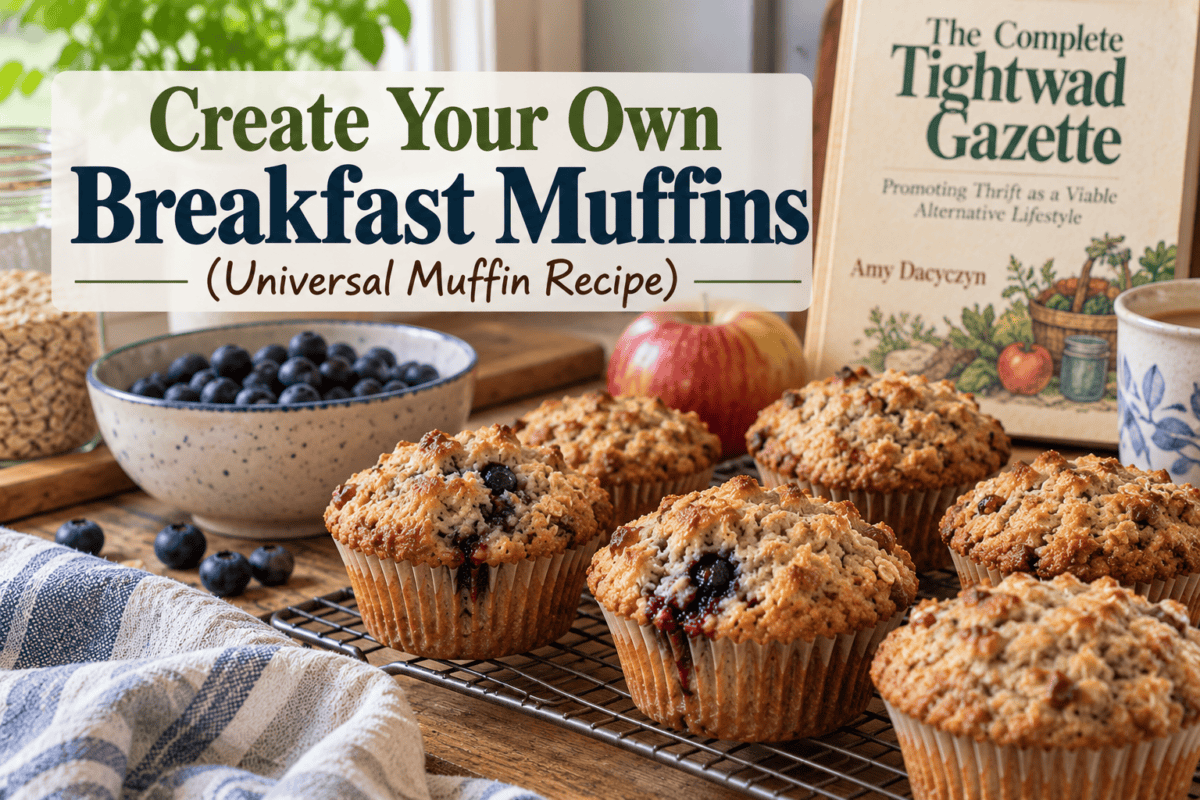
Table of Contents
- Why I Love This Muffin-Making Method
- The Universal Muffin Formula
- How to Customize Your Homemade Muffins
- Add Fruit, Nuts, Vegetables, and Other Extras
- Amy’s Clever Blender Trick for Leftover Cooked Grains
- Easy Mix-and-Match Muffin Ideas
- Two More Fun Muffin Variations
- How to Make a Small Batch of 6 Muffins
- Tips for Making Great Homemade Muffins
- How to Store and Freeze Homemade Muffins
- How Many Calories and WW Points?
- Universal Muffin Recipe
- A Little About Amy Dacyczyn and The Tightwad Gazette
- More Easy Homemade Muffin Recipes to Try
- A Final Thought
Why I Love This Muffin-Making Method
- One formula, endless possibilities. Make sweet, savory, fruity, or hearty muffins without needing a different recipe every time.
- Uses what you have. Perfect for leftover cooked grains, breakfast cereal, ripe fruit, and other odds and ends.
- Saves money. Use ingredients already in your kitchen instead of shopping for a specific recipe.
- Easy to customize. Adjust the grains, fat, sweetener, and additions to suit your preferences.
- Works for smaller households. Make a dozen to freeze or use the six-muffin variation below.
The Universal Muffin Formula
The beauty of Amy’s approach is that it’s more of a framework than a rigid recipe.
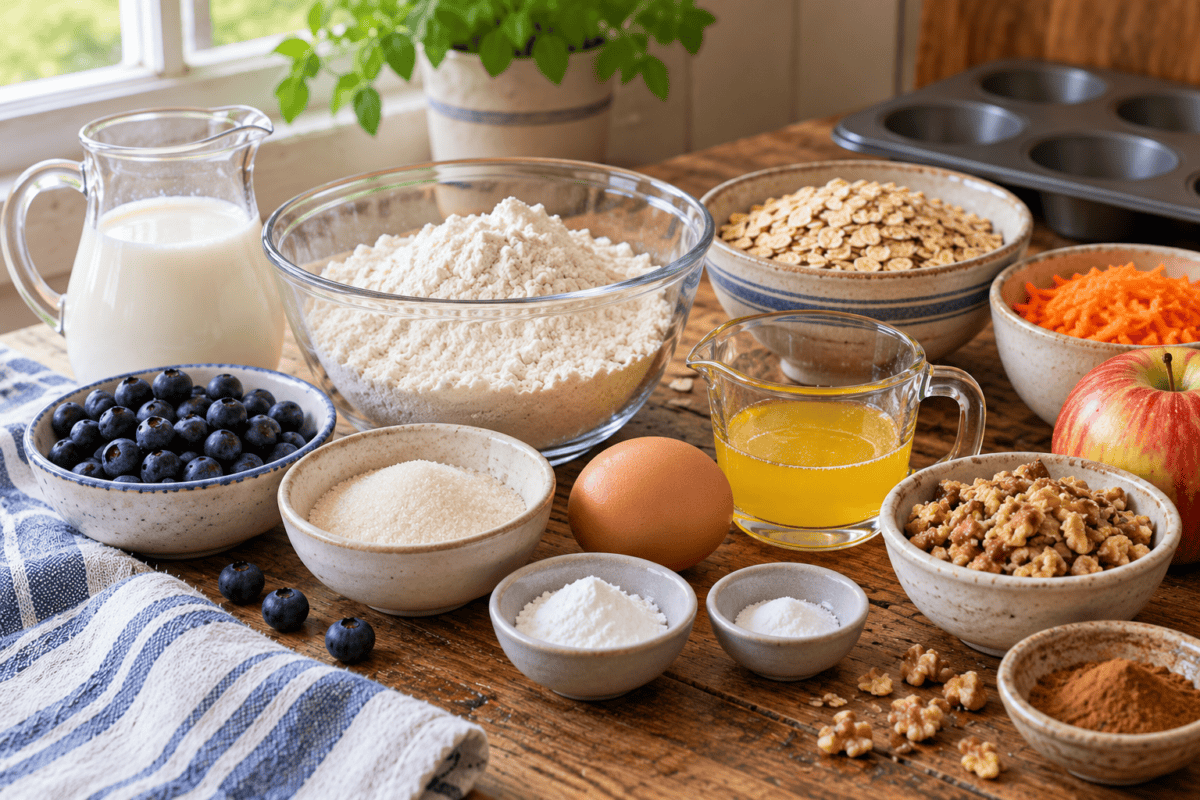
You start with seven basic components: grain, liquid, fat, egg, sweetener, baking powder, and salt. From there, you can make substitutions and add whatever fruit, vegetables, nuts, or other ingredients you have available.
The basic formula makes approximately 12 muffins.
| Ingredient | Basic Amount |
|---|---|
| Grain | 2 to 2½ cups |
| Milk or other liquid | 1 cup |
| Fat | Up to ¼ cup |
| Egg | 1 |
| Sweetener | Up to ½ cup |
| Baking powder | 2 teaspoons |
| Salt | ½ teaspoon |
| Optional additions | Up to 1½ cups |
These are starting amounts. Depending on the ingredients you choose, you may need to adjust the liquid or baking powder.
How to Customize Your Homemade Muffins
Instead of following a different recipe for every kind of muffin, use these simple guidelines to create your own combinations.
1. Choose Your Flour or Grain
Start with 2 to 2½ cups all-purpose flour.
Or replace 1 cup of the white flour with:
- Oatmeal or oats
- Cornmeal
- Whole wheat flour
- Rye flour
- Flaked breakfast cereal
Using leftover cooked grains? Substitute 1 cup cooked oatmeal, rice, or cornmeal for ½ cup of the flour and reduce the milk to ½ cup.
When using whole or cooked grains, increase the baking powder to 3 teaspoons.
2. Choose Your Liquid
Start with 1 cup milk.
You can substitute buttermilk, sour milk, or fruit juice for part or all of the milk.
To make sour milk, add 1 tablespoon vinegar to 1 cup milk.
Important: When using buttermilk or sour milk, reduce the baking powder to 1 teaspoon and add ½ teaspoon baking soda.
If using honey or molasses instead of sugar, reduce the milk to ¾ cup.
3. Choose Your Fat
Use ¼ cup vegetable oil or 4 tablespoons melted butter or margarine.
You can also substitute regular or crunchy peanut butter for part or all of the fat.
If you’re adding wet ingredients such as applesauce, pumpkin puree, or mashed banana, you can reduce or even omit the fat, although the texture may be a little different.
I generally prefer making modest adjustments rather than eliminating every bit of fat. A little goes a long way toward making muffins moist and delicious.
4. Add an Egg
Amy’s original formula uses one large egg.
She also suggests substituting 1 heaping tablespoon soy flour mixed with 1 tablespoon water.
When using cooked grains, her original method calls for separating the egg, beating the white until stiff, and gently folding it into the batter at the end.
Fortunately, she later discovered an easier blender (affiliate link) method, which I’ll explain below.
5. Adjust the Sweetener
Use anywhere from 2 tablespoons to ½ cup granulated sugar, depending on how sweet you want your muffins.
Other options include:
- Up to ¾ cup brown sugar
- Up to ½ cup honey
- Up to ½ cup molasses
When using honey or molasses, reduce the milk to ¾ cup.
For savory muffins, use just 2 tablespoons sugar.
One thing I appreciate about homemade muffins is being able to control the sweetness. I prefer muffins that taste like muffins, not cupcakes!
6. Adjust the Baking Powder
Start with 2 teaspoons baking powder.
Increase to 3 teaspoons when using whole grains, cooked grains, or more than 1 cup of additions.
If using buttermilk or sour milk, reduce the baking powder to 1 teaspoon and add ½ teaspoon baking soda.
These small adjustments help keep the muffins light.
7. Add Salt
Use ½ teaspoon salt, or omit it if you’re following a salt-restricted diet.
Add Fruit, Nuts, Vegetables, and Other Extras
Once you’ve chosen your basic ingredients, you can add up to 1½ cups total additions in any combination.
Amy divides them into three useful categories:
- Dry additions: Nuts, sunflower seeds, raisins, coconut, and other dried ingredients.
- Moist additions: Blueberries, chopped apples, freshly shredded zucchini, and shredded carrots.
- Wet additions: Pumpkin puree, applesauce, mashed banana, mashed cooked sweet potato, and mashed cooked carrots.
The important adjustment: If using more than 1 cup of wet additions, reduce the milk to ½ cup.
If using drained canned fruit or thawed shredded zucchini, you can also substitute some of the reserved liquid for the milk.
Add Spices and Flavorings
Choose seasonings that complement your additions.
Try 1 teaspoon cinnamon with ¼ teaspoon nutmeg or cloves, or add 2 teaspoons grated orange or lemon zest.
Pumpkin pie spice and vanilla are other easy possibilities.
Amy’s Clever Blender Trick for Leftover Cooked Grains
This may be my favorite part of the entire method.
In a later article, Amy described discovering that a blender (affiliate link) made it much easier to incorporate leftover cooked grains into muffin batter.
Instead of separating the egg and beating the white, she blended the cooked grains with the wet ingredients.
Here’s how:
- Combine the dry ingredients in a large mixing bowl (affiliate link).
- Place about ½ cup cooked grains, the egg, milk, and any other ingredients you want blended—such as banana, pumpkin, applesauce, peanut butter, honey, or molasses—in a blender.
- Blend until well combined.
- Stir the blended mixture into the dry ingredients just until moistened.
- Adjust with a little more liquid or flour if necessary to get a thick, spoonable batter.
Leave out ingredients you want to retain their texture, such as shredded zucchini or whole blueberries. Fold those in afterward.
Amy found that blending helped incorporate cooked grains so thoroughly that you could hardly tell they were there.
It’s a clever way to turn leftover oatmeal, rice, couscous, or other cooked grains into something completely new.
Note: Amy’s original cooked-grain substitution allows 1 cup cooked grain with adjustments to the flour and milk. Her later blender technique describes using about ½ cup cooked grain per batch. Both are useful approaches.
Easy Mix-and-Match Muffin Ideas
Once you understand the formula, the possibilities are nearly endless.
| Muffin Variation | What to Add or Change |
|---|---|
| Apple Cinnamon | 1 cup chopped or shredded apple + 1 teaspoon cinnamon |
| Blueberry Lemon | 1 cup blueberries + 2 teaspoons lemon zest |
| Banana Walnut | 1 mashed banana + ½ cup chopped walnuts |
| Carrot Spice | ¾ cup shredded carrots + cinnamon and nutmeg |
| Oatmeal Raisin | Replace 1 cup flour with 1 cup oats; add ½ cup raisins |
| Orange Cranberry | ½ cup dried cranberries + 2 teaspoons orange zest |
| Pumpkin Spice | 1 cup pumpkin puree + pumpkin pie spice |
| Peanut Butter | Substitute peanut butter for part or all of the fat |
| Savory Cheese | ½ cup shredded cheese + herbs; reduce sugar to 2 tablespoons |
These are starting points for experimentation. Remember to adjust the liquid and baking powder as needed for the ingredients you choose.
Two More Fun Muffin Variations
Jam-Filled Muffins
For a sweet surprise in the center, fill muffin cups halfway with plain batter.
Add 1 teaspoon of your favorite jam or jelly, then cover with about 2 tablespoons more batter.
Bake as usual.
You can also sprinkle the tops with a little cinnamon sugar before baking.
Savory Muffins
Muffins don’t have to be sweet!
For savory muffins, reduce the sugar to 2 tablespoons and leave out the fruit.
Try combinations of shredded cheese, cooked crumbled bacon, grated onion, shredded zucchini, Parmesan cheese, parsley, or marjoram.
These would be delicious alongside a bowl of soup or chili.

How to Make a Small Batch of 6 Muffins
With just two of us, I don’t always need a full dozen muffins. That’s why I like having a smaller version of this flexible recipe.
This six-muffin adaptation uses one whole egg, so there’s no need to measure half an egg or figure out what to do with the leftovers.
It’s based on familiar muffin-making proportions, with the same freedom to experiment with different ingredients.
Small-Batch Universal Muffin Recipe
Makes 6 standard muffins
| Ingredient | Amount |
|---|---|
| All-purpose flour | 1 cup (120 g) |
| Granulated sugar | 2 tablespoons to ¼ cup |
| Baking powder | 1½ teaspoons |
| Salt | ¼ teaspoon |
| Milk | ½ cup |
| Large egg | 1 |
| Melted butter or vegetable oil | 2 tablespoons |
| Optional additions | Up to ¾ cup |
Directions:
- Preheat oven to 400°F. Grease or line 6 cups of a standard muffin pan.
- In a medium bowl, whisk together the flour, sugar, baking powder, and salt.
- In a separate bowl, whisk together the milk, egg, and melted butter or oil.
- Add the wet ingredients to the dry ingredients, stirring gently just until combined.
- Fold in any optional additions.
- Divide the batter among the prepared muffin cups, filling each about two-thirds full.
- Bake for approximately 15–20 minutes, until lightly golden and a toothpick inserted in the center comes out clean.
Small-batch substitution tips: You can use many of the same flour, grain, sweetener, and flavoring options described above. Start with smaller quantities, and adjust the liquid as needed when using especially moist additions such as pumpkin or mashed banana.
This six-muffin variation is a separate adaptation inspired by the universal muffin concept, not Amy’s original formula.
Tips for Making Great Homemade Muffins
- Don’t overmix. Stir just until the dry ingredients are moistened. A lumpy batter is exactly what you want.
- Watch the consistency. The batter should be thick and spoonable, not thin like pancake batter.
- Pay attention to moisture. Cooked grains, pumpkin, applesauce, and mashed bananas can all affect the amount of liquid needed.
- Start with simple substitutions. If you’re new to experimenting, try one or two changes at a time.
- Write down what works. Once you discover a combination you love, you’ll want to make it again.
How to Store and Freeze Homemade Muffins
Store completely cooled muffins in an airtight container at room temperature for up to 2 days.
For longer storage, refrigerate for up to 5 days or freeze in a freezer-safe bag for up to 3 months for best quality.
To serve, thaw at room temperature or warm briefly in the microwave (affiliate link).
With just two of us, I especially appreciate being able to freeze the extras. It’s nice knowing there’s something homemade waiting whenever we want it.
How Many Calories and WW Points?
The calories and WW Points will depend on the ingredients and substitutions you choose.
For a plain muffin made with all-purpose flour, milk, sugar, egg, and vegetable oil, the nutrition can be calculated using the specific amounts in your recipe card.
For accurate WW Points, enter your chosen ingredients into the WW Recipe Builder.
If you’ve made this Create a Muffin Recipe, please give the recipe a star rating below and leave a comment letting me know how you liked it. And stay in touch on Pinterest, Facebook, Instagram and Twitter for the latest updates.
Universal Muffin Recipe
Ingredients
- 2 cups all-purpose flour, see notes for substitutions
- up to 1/2 cup sugar, see notes for substitutions
- 2 teaspoons baking powder
- 1/2 teaspoon salt
- 1 cup milk
- 1 large egg
- 1/4 cup vegetable oil, or 4 tablespoons melted butter
- up to 1-1/2 cups optional additions, see notes
- optional spices and/or flavorings, seet notes
Instructions
- Preheat oven to 400°F. Grease a standard 12-cup muffin pan or line with paper liners.
- In a large bowl, whisk together flour, sugar, baking powder, and salt, along with any dry spices.
- In a separate bowl, whisk together milk, egg, and oil or melted butter. Pour the wet ingredients into the dry ingredients and stir gently just until combined. The batter should be lumpy. Fold in any optional additions.
- Divide the batter among the prepared muffin cups, filling each about two-thirds full.
- Bake for approximately 20 minutes, checking after 15 minutes, until lightly golden and a toothpick inserted in the center comes out clean. Cool briefly before removing from the pan.
Notes
Universal Muffin Substitutions
Grains: Replace 1 cup white flour with oats, cornmeal, whole wheat flour, rye flour, or flaked cereal. Cooked grains: Replace ½ cup flour with 1 cup cooked oatmeal, rice, or cornmeal. Reduce milk to ½ cup and increase baking powder to 3 teaspoons. Alternatively, use the blender technique described above. Milk: Substitute buttermilk, sour milk, or fruit juice. With buttermilk or sour milk, use 1 teaspoon baking powder plus ½ teaspoon baking soda. Fat: Substitute peanut butter for some or all of the oil or butter. Reduce fat when using wet additions if desired. Egg: Substitute 1 heaping tablespoon soy flour plus 1 tablespoon water. Sweetener: Use 2 tablespoons to ½ cup white sugar, up to ¾ cup brown sugar, or up to ½ cup honey or molasses. Reduce milk to ¾ cup when using honey or molasses. Additions: Use up to 1½ cups total dry, moist, or wet additions. If using more than 1 cup wet additions, reduce milk to ½ cup. Leavening: Increase baking powder to 3 teaspoons when using whole grains, cooked grains, or more than 1 cup additions. Storage: Freeze completely cooled muffins for up to 3 months for best quality. Calories and Points will depend on specific ingredients used.A Little About Amy Dacyczyn and The Tightwad Gazette
Amy Dacyczyn became well known in the 1990s for The Tightwad Gazette (affiliate link), a newsletter and series of books devoted to practical, creative ways to live well while spending less.
What I appreciate about her approach is that frugality isn’t about deprivation. It’s about resourcefulness, creativity, and making thoughtful use of what you already have.
Her universal muffin formula is a perfect example. Instead of needing a different recipe for every kind of muffin, you learn a few basic principles and make the most of what’s in your kitchen.
You can find Amy’s original article, Create a Breakfast Muffin, along with hundreds of other money-saving ideas, in The Complete Tightwad Gazette.
More Easy Homemade Muffin Recipes to Try
If you enjoy making homemade muffins, here are a few more favorites from Simple Nourished Living. They’re wonderful examples of how a few simple ingredients can become something delicious.
- Old-Fashioned Apple Bran Muffins – My latest version of the classic Kellogg’s All-Bran muffins, made extra moist with shredded apple. A recipe I’ve loved since college.
- Low Fat Apple Bran Muffins – Another take on an old favorite, made with whole wheat flour, applesauce, and warm spices.
- Ina’s Chunky Low Fat Banana Bran Muffins – A hearty, satisfying small-batch recipe using ripe bananas, bran, and buttermilk.
- Blueberry Bran Muffin Tops – Lightly sweetened muffin tops made with bran flakes and fresh blueberries. Just 75 calories each.
- Low-Calorie Fiber One Mango Muffins – A clever way to use breakfast cereal in muffins, with the addition of sweet, juicy mango.
- Easy Kodiak Cakes Muffins – Another convenient, flexible approach to homemade muffins using a ready-made pancake mix.
For even more inspiration, browse my complete collection of healthy, WW-friendly muffin recipes.en more inspiration, browse my complete collection of healthy, WW-friendly muffin recipes.
A Final Thought
One of the things I’ve come to appreciate about cooking is how much freedom comes from knowing a few basic techniques.
You don’t need a different recipe for every occasion. Sometimes all you need is a dependable formula and the confidence to make it your own.
And there’s something deeply satisfying about turning a little leftover oatmeal, an overripe banana, or some forgotten breakfast cereal into a batch of homemade muffins.
Good food doesn’t have to be complicated.