This post may contain affiliate links. Please read our disclosure policy.
Do you have a healthy relationship with sugar or do you sometimes feel like you have a sugar addiction?
As humans, it’s natural to love sweet things.
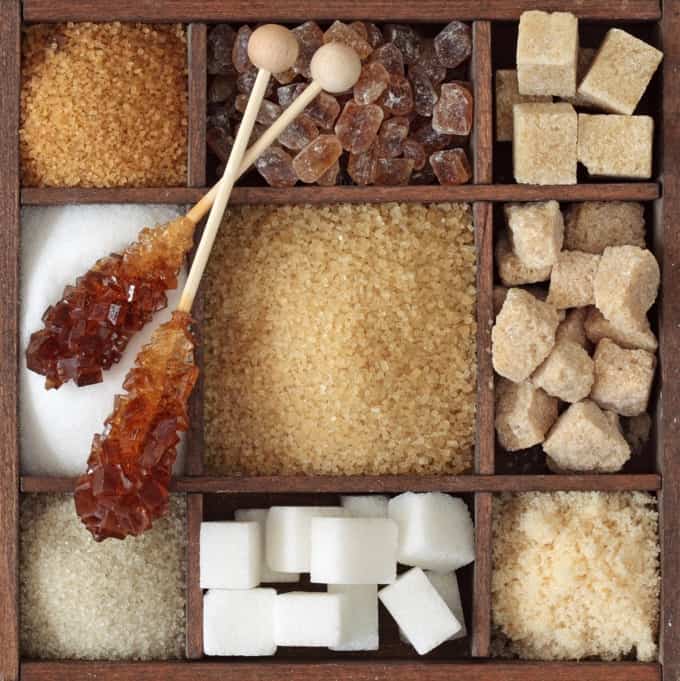
Throughout millions of years of evolution, we have been programmed to desire sweet tasting foods.
And before the introduction of sugar into our food supply about 2000 years ago, the only way we could satisfy this craving was with plants – fruits, vegetables, milk and grains.
Times have changed. We are now bombarded with sugar. It’s everywhere.
I love sugar as much as the next gal and don’t want to demonize it. No food is innately good or bad. And I don’t believe extreme food practices are necessary for a happy healthy life.
It’s not what you eat some of the time; it’s what you eat most of the time that affects your health.

However, certain foods create problems for people and one of the most challenging is sugar.
So here are some things you should know about this sweetest of substances.
�»)
Things to Know About Sugar
- The refined table sugar we now consider a staple was once so rare and expensive it was called “white gold.”
- Sucrose (white sugar made from sugar cane or beets) and high fructose corn syrup (HFCS) are the most widely used sweeteners in the U.S. today.
- U.S. Sugar consumption has increased dramatically through the decades. In the early 1800s U.S. per capita consumption was 12 pounds per year or about 3 teaspoons per day. By the early 2000s, according to the USDA, we had increased our consumption to more than 90 pounds per person per year or about 24 teaspoons per day. So we are eating about 8 times more sugar than we did just 200 years ago.
- HFCS was rapidly introduced to many processed foods and soft drinks in the U.S. from about 1975 to 1985 and now accounts for about 56 percent of the sweeteners consumed each year.
- Sugar enters the bloodstream very quickly leading to rapid fluctuations in blood sugar levels, that can cause physical and emotional symptoms including excitability, hyperactivity, fatigue, depression and exhaustion.
- Sugar has calories but no nutritional value — no protein, vitamins, minerals, antioxidants or fiber.
- The USDA recommends we get no more than 10 teaspoons (40 grams) of added sugars per day and the American Heart Association (AHA) recommends that women get no more than 6 teaspoons (24 grams) per day.
- There are 4 grams of carbohydrate and 16 calories in each teaspoon of sugar.
- Common sources of added sugar include:
- Sodas, fruit drinks, fancy coffee drinks and other sweetened beverages
- Candy, cookies, pies and other sweet treats
- Ice cream, yogurt and other sweetened dairy products
- Most processed foods including cereals, peanut butter, bread, tomato sauce, granola bars, etc.
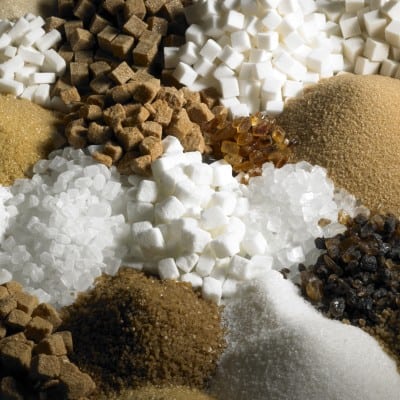
Do you know how much sugar is in the foods and drinks you consume?
How Much Sugar Is In…
| Food | Grams of Sugar* | Teaspoons of Sugar |
|---|---|---|
| 16 ounce Vanilla Frappuccino | 64 | 16 |
| 16 ounce Berry Smoothie | 59 | 15 |
| Large Blueberry Muffin | 48 | 12 |
| 16 ounce Sweetened Lemon Iced Tea | 46 | 12 |
| 12 ounce Soda | 40 | 10 |
| 2 ounce Snickers Bar | 30 | 8 |
| 6 ounce Low Fat Fruit Yogurt | 24 | 6 |
| 1 cup Granola | 24 | 6 |
| 1/2 cup Frozen Vanilla Yogurt | 16 | 4 |
| *Respected nutrition professor, Marion Nestle, believes that you should consider any product containing more than 15 grams of sugar per serving a dessert! | ||
Sugar’s Many Names
What we think of as sugar goes by many different names including:
Brown sugar is a combination of refined white sugar and molasses.
Confectioner’s sugar or powdered sugar consists of finely ground sucrose crystals that are mixed with a small amount of cornstarch.
Corn syrups are liquid sweeteners are produced through the process of splitting starch.
Dextrose or glucose, is also known as corn sugar. It’s commercially made from starch by the action of heat and acids, or enzymes. It is sold blended with regular sugar.
High-fructose corn syrup (HFCS) is a sweetener made from cornstarch. The amounts of fructose vary with the manufacturer. An enzyme-linked process increases the fructose content, thus making HFCS sweeter than regular corn syrup.
Honey is an invert sugar formed by an enzyme from nectar gathered by bees. Honey contains fructose, glucose, maltose and sucrose.
Invert sugar is a mixture of glucose and fructose formed by splitting sucrose molecules in a process called inversion. Invert sugar prevents crystallization of cane sugar in candy making.
Lactose or milk sugar is found in the milk of mammals. For commercial purposes it is made from whey and skim milk.
Levulose or fructose is a commercial sugar much sweeter than sucrose. Its sweetness is dependent on its physical form and how it’s used in cooking. Fructose, known as a fruit sugar, occurs naturally in many fruits.
Raw sugar consists of coarse, granulated crystals formed from the evaporation of sugar cane juice.
Sorbitol, mannitol, malitol and xylitol are sugar alcohols or polyols. They occur naturally in fruits and are produced commercially from such sources as dextrose. Xylitol is a sugar alcohol made from a part of birch trees. Sorbitol, mannitol and malitol are about half as sweet as sucrose. Xylitol is equally as sweet as sucrose.
Sucrose or table sugar comes from sugar cane or sugar beets and consists of two simple sugars – glucose and fructose. It is sold in either granulated or powdered form.
Turbinado sugar is raw sugar that goes through a refining process to remove impurities and most of the molasses.
Sugar’s Effects on Health
So, what happens when you eat too much sugar? Here are some of the most common health problems, both major and minor that are attributed to an overabundance of sugar in the diet:
- Too much refined sugar creates a cycle of intense highs and lows, keeping our blood sugar, hormones and neurotransmitters out of balance.
- Quick spikes and dips in our blood sugar levels causing excitability, nervous tension, hyperactivity, fatigue, depression, weariness, exhaustion, headaches, cravings and mood swings
- Excess weight gain
- Tooth decay
- Chronic inflammation which has been linked to many diseases including heart disease and cancer
- Low HDL (good cholesterol), which is a risk for heart disease
- High triglycerides, which is a risk for heart disease
- Accumulation of fat in the liver which leads to insulin resistance, metabolic syndrome and diabetes
Links:
- Is Sugar Toxic? – NY Times article by Gary Taubes
- The Truth About Sugar – WebMD
- The Sugar Quiz target=”_blank” – A fun quiz to see if you can identify the amounts of sugar in various foods
You might also like…
- Manage Your Cravings with Slim & Sassy Gum
- 10 Common Causes of Cravings
- The Secret to Ending Emotional Eating
- 11 Simple Ways to Deal with Sugar Cravings
PS... Need a little extra help managing your cravings?
Check out this Slim & Savvy Gum!